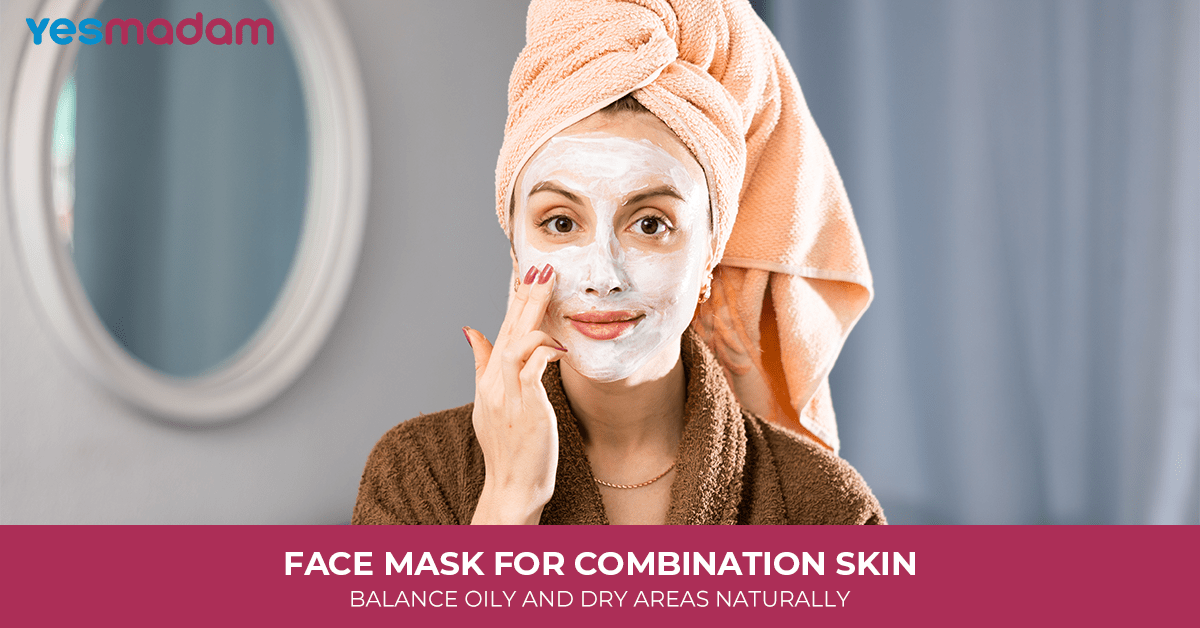
Face Mask For Combination Skin: Balance Oily And Dry Areas Naturally
Yes, we understand your confusion! You may feel overwhelmed with so many skincare to-dos and DIY ideas for both oily and dry skin types filling the internet.
But you can relax and kick back, as this blog on a face mask for combination skin will help you create a DIY personalized skincare routine for combination skin. Learn more about how to manage the oil bursting from the T-zone and a dry spell on the rest of your face naturally.
Table of Contents
What is Combination Skin?
Combination skin includes dry and oily patches, with the T-zone usually oily while the cheeks are either normal or dry, making treatment difficult. Moreover, combination skin is the most challenging to treat because of its complex reaction to chemicals. That’s where the need for DIY face masks for those with a combination complexion comes in. These natural masks help you keep the ideal skin balance.
What are The Benefits Of Face Masks For Combination Skin?

DIY Face masks for combination skin are important for individuals with combination skin because of their ability to treat multiple skin concerns simultaneously. Here are the key benefits:
- May help reduce excess oil: Helps regulate sebum production, through reducing excess oil and shine in the oily zones, while hydrating the dry patches.
- Deep cleanses pores: Deeply cleans the pores, eliminating dirt, impurities, and excess oil that may cause blackheads and breakouts.
- May control inflammation: Face masks help regulate acne and reduce inflammation by balancing the skin’s PH levels.
- May soothe irritated skin: Face masks ingredients like clay absorb excess oil, and other soothing botanicals may help calm irritated skin.
- May enhance overall appearance: These masks can help improve the overall texture and appearance of skin with a mattified, radiant, and refreshed feel.
Homemade Face Mask for Combination Skin: 4 DIY Tips and Methods
Here are the 3 examples of DIY face masks for combination you can try at home easily:
1. Cucumber Face Mask
The moisturising properties of cucumber are harnessed in this DIY method and thus, will help leave your skin feeling invigorated and refreshed.
Ingredients :
- 1 tablespoon of cucumber ( peeled and grated)
- 1 tablespoon of yogurt
- 1 tablespoon of aloe vera gel
Directions: Step by step
Step 1: Mix thoroughly all the ingredients to make a smooth paste.
Step 2: Evenly apply the mixture on the face.
Step 3: Let the mixture stay for at least 15-20 minutes.
Step 4: Wash with cold water.
2. Greek Yogurt Oatmeal
This mask helps hydrate dry areas, soothe inflammation, and exfoliate gently.
Ingredients:
- Oatmeal
- Yogurt
Directions: Step by step
Step 1: Mix ground oatmeal with plain yogurt to make a smooth paste.
Step 2: Apply the mix on your face and leave it on your face for 15-20 minutes before rinsing off.
3. Honey and lemon
This mask helps regulate excess oil, helps brighten the skin and has antibacterial properties.
Ingredients:
- Honey
- Lemon
Directions: Step by step
Step 1: Combine equal parts of honey and freshly squeezed lemon juice.
Step 2: Avoiding the eye area, apply the mixture to your face and let it stay on your face for 15-20 minutes before rinsing.
4. Cucumber and Honey
This mask helps in de-tanning, hydrating your face and tightening your pores.
Ingredients :
- Cucumber
- Honey
Directions: Step by step
Step 1: Grate 1 cucumber and squeeze its juice.
Step 2: Mix 1 teaspoon of honey to make a smooth paste.
Step 3: Apply the mixture all over your face . Leave it for 15-20 minutes.
Step 4: Rinse with normal water.
More Information For You: The Ultimate Guide to Skin Cooling Masks
Good Face Masks for Combination Skin

For combination skin, a good face mask is a clay-based formula to control oil in the T-zone, paired with a hydrating mask on the cheeks, a technique called multi-masking.
Best options for combination skin
- Multi-masking: This is the most effective method for combination skin.
- Oily areas (T-zone): Apply a clay mask to absorb excess oil and clarify pores. Ingredients like kaolin clay, bentonite clay, or activated charcoal work well.
- Drier areas (cheeks): Apply a hydrating or cream mask to add moisture without clogging pores. Look for ingredients like hyaluronic acid or honey.
- Single-step masks:
- Niacinamide masks: These help regulate oil production in oily areas while providing moisture to dry areas.
- Charcoal masks: These are effective for deep cleaning and controlling shine without stripping natural oils.
- Clay masks: A clay mask with ingredients like Fuller’s Earth (Multani Mitti) can be beneficial for the entire face, balancing oil production and clearing pores.
- Masks with salicylic acid (BHA): These can help both exfoliate and balance the skin.
Tips for using masks
- Frequency: Use masks 1–2 times a week for combination skin to avoid over-stripping the skin.
- Targeted application: Always apply different masks to the specific areas that need them most when multi-masking.
- Look for non-comedogenic products: This ensures the mask won’t clog your pores.
Common Ingredients in Face Masks for Combination Skin
The ingredients in face masks for combination skin share a common motto: To provide hydrating + pore refining solutions that actually work. The examples of these ingredients include:
| Ingredients in face mask for combination skin | How it helps |
| Niacinamide | Regulates oil production in the T-zone while maintaining moisture in dry zones. |
| Hyaluronic acid | Offers lightweight, non-comedogenic hydration and is ideal for combination skin. |
| Centella asiatica | Reduces inflammation and soothes irritation as an ingredient of a face mask for combination acne-prone skin. |
| Rice water | Gently brightens while regulating oil production. |
| Clay ( Bentonite or Kaolin) | Best suited for combination skin type, clay masks are known to absorb oil and impurities from the skin. |
| Activated charcoal | Charcoal masks are known to absorb excess oil, making them ideal for combination skin types. |
How To Use a Homemade Face Mask For Combination Skin Type
To reap the maximum benefits, follow these steps to apply a face mask for combination skin correctly and effectively:
- Cleanse properly: Cleanse face properly to remove impurities with a pH-balanced, gentle cleanser.
- Apply: Apply a thin layer of face mask all over your face and neck.
- Rest: Leave the mask for the approximate duration of 15-20 minutes
- Rinse: Wash the face mask thoroughly
- Pat dry: Use a soft towel and pat dry your face.
- Moisturise: Follow up with an appropriate moisturiser as per your skin type.
Common Mistakes To Avoid
Face masks for combination skin are usually safe when used as directed, but common mistakes need to be avoided:
- Not doing a patch test: Don’t forget to do a patch test to avoid the risks of rashes, itching, or swelling due to the sensitivity of ingredients used in the mask.
- Neglecting dry areas: It is wrong to assume that combination skin does not require hydration. Dry cheeks need consistent moisture to retain healthy barrier function.
- Over-masking the T-zone: Applying too many oil-control face masks may trigger increased oil production. Limit these DIY applications to 2-3 times a week.
- Use of harsh ingredients: Avoid preparing masks with strong fragrances, alcohol, or aggressive exfoliants that may disrupt your skin’s natural barrier.
Conclusion
Face mask for combination skin helps you understand the fact that balance doesn’t imply compromise. Start with 2-3 masks per week, see how your skin responds, and adjust frequency based on seasonal changes and skin behaviour. Remember, that the best face mask for a combination skin care routine is the one that evolves with your skin’s changing needs while striking that perfect balance between hydration and oil control.
FAQs
What type of face mask is best for combination skin?
The best face mask for combination skin is multi-masking, which uses different masks, like clay or charcoal masks, on different parts of the face.
Are face masks good for combination skin?
Yes! Face masks help balance oil production, hydrate dry areas, and clear clogged pores. The key is to choose a mask that’s both purifying and moisturizing to treat the different needs of your skin zones.
How often should I use a face mask on combination skin?
You can use a face mask 2-3 times a week. Overusing masks may dry out your cheeks or overstimulate oil glands in your T-zone. Choose gentle formulas for regular use.
Are natural or homemade face masks effective for combination skin?
Absolutely. Natural ingredients like yogurt, honey, aloe vera, cucumber, and oatmeal help nourish and balance the skin. Homemade masks are gentle, budget-friendly, and customizable to your needs.
Can face masks help control oil in my T-zone?
Yes. Masks containing clay, charcoal, or tea tree oil absorb excess oil, reduce shine, and prevent breakouts in your T-zone while keeping other areas calm and balanced.
Do face masks hydrate dry areas of combination skin?
Yes, if you use hydrating masks with ingredients like hyaluronic acid, glycerin, or aloe vera. They lock in moisture and soften dry patches without making your skin greasy.
Should I wash my face before applying a face mask?
Yes. Always cleanse your face to remove dirt, makeup, and oil. A clean surface helps the mask’s ingredients penetrate better and deliver visible results.
Can face masks cause breakouts on combination skin?
Sometimes, yes — especially if the mask is too harsh or comedogenic (pore-clogging). Avoid masks with heavy oils or artificial fragrances. Instead, choose non-comedogenic and gentle formulas that balance your skin without irritation.
What is the best time to apply a face mask for combination skin?
The best time is after cleansing and exfoliating, preferably in the evening. This allows your skin to absorb the nutrients overnight and helps control oil and dryness more effectively by morning.
Should I moisturize after using a face mask on combination skin?
Yes! Always follow up with a light, oil-free moisturizer after rinsing off the mask. This helps lock in hydration and keeps your skin balanced — preventing the dry areas from tightening and the oily zones from overproducing oil.