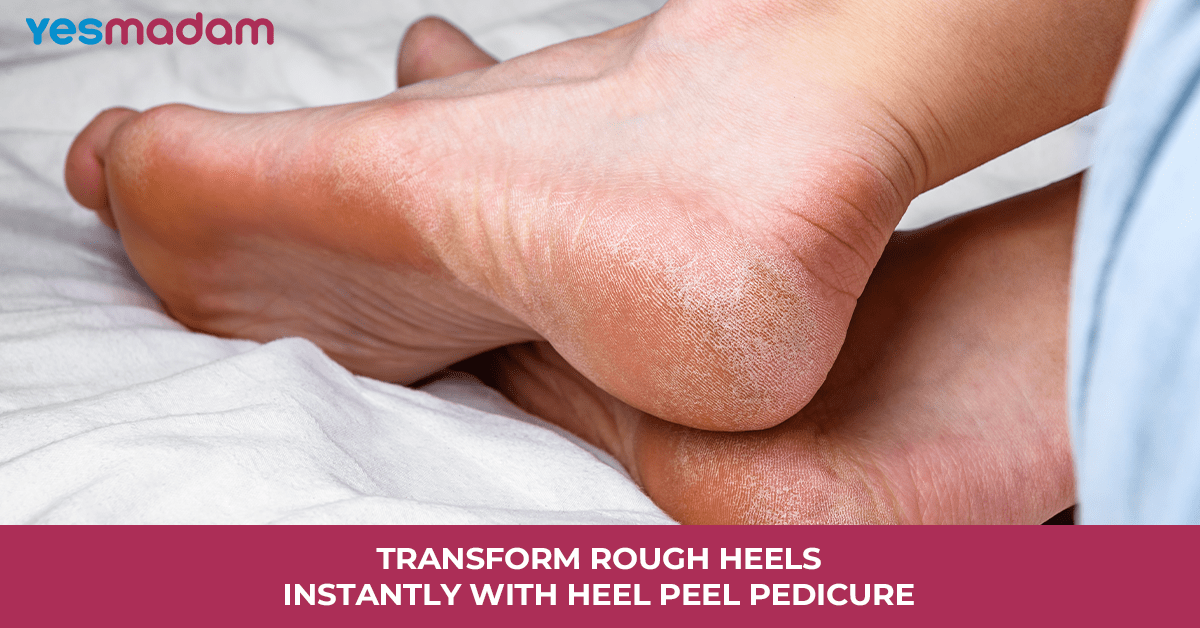
Transform Rough Heels Instantly With Heel Peel Pedicure
Do you feel embarrassed to remove your shoes in public places because of cracked heels? This is obvious, as who likes dry and cracked heels? Nobody!
These moments of self-consciousness may lead you to learn how to treat this common heel condition properly.
Here arises the need for exfoliating food feels, such as a heel peel pedicure. This blog will take you through what this type of pedicure is, how it is done, the benefits, and so much more.
Table of Contents
What are The Causes of Cracked Heels?

Cracked heels generally start as small cracks or splits in the skin of your heels. Before delving into the crucial question of can pedicures cure cracked heels, it is important to know the reasons for cracked heels:
- Age: Growing age causes the natural oils in our skin to deplete, which makes our feet more susceptible to dryness and cracking.
- Genetics: Some individuals are naturally predisposed to dry skin and develop cracked heels based on their genes.
- Environment: Hot, cold, and dry environments may strip moisture from skin and may worsen or cause cracked heels.
- Dry Skin: Lack of moisturisation also causes the skin on your heels to become very dry and rough.
- Mechanical stress: Running, walking, standing for long periods, and other activities that put pressure on your heels may cause micro-tears in dry skin and cause cracking over time.
Will a Pedicure Fix Cracked Heels?
Yes, pedicures are not just meant to beautify your feet-when done right, they provide remarkable foot health benefits as highlighted below:
- Early identification: A pedicurist will check your feet thoroughly during the treatment and be able to detect early symptoms like fungal infections or other issues.
- Scrubbing: This is important for cracked heels as it removes buildup, enabling moisture to penetrate your skin better.
- Moisturising effects: Nourishing foot masks or massages infused with moisturising agents like paraffin wax may help with dry skin and cracks effectively.
What is a Heel Peel Pedicure Treatment?
A type of skin treatment that utilizes multiple natural acids to remove dead , dry skin , making the skin on your feet feel revitalized and smooth, can be referred to as a heel peel procedure. These natural acids are, but an exfoliating jelly-like foot mixture comes in plastic booties that slip over your feet. The shedding of old and dead skin helps provide you with smooth, beautiful feet.
More Information For You: Face Yoga and Ice Roller
A Step-by-Step Guide On How To Do a Heel Peel Pedicure Treatment

Here’s how the heel peel exfoliating pedicure works, including three stages of prepping your feet, applying the peel, and caring for your feet after the peel:
Prepping your feet
- Washing feet: This enables the peel’s ingredients to penetrate your feet’ skin better.
- Soak feet for several minutes: After cleaning your feet, soak your feet in the foot bath or bathtub water for 10-15 minutes to soften the skin, so that it may easily absorb the peel’s ingredients.
- Pat your feet dry: Once you’ve finished soaking your feet, pat them dry using a clean towel to make them ready for the pedicure steps ahead.
Applying the heel peel
- Cut open the booties: Use a pair of scissors to open the plastic booties that include the jelly-like mixture.
- Slip the booties over your feet well: Following the exact pattern of how you would wear everyday socks, carefully put the booties over your feet. Pull off the adhesive tabs that the booties contain that help secure them closed over your feet.
- Wear a pair of socks over the booties: Add a tighter pair of regular socks over the booties to prevent slippage and to move around in the booties easily and comfortably.
- Soaking feet in the booties extending an hour or more: Keep the booties on your feet spanning over an hour or up to two hours for a more effective exfoliation effect.
Caring for your feet after the peel
- Take off the booties: After the soaking hour or more is over, first take off the socks and the heel peel booties.
- Rinse off feet: Once you remove the booties, also eliminate the leftover residue from the skin through rinsing feet using lukewarm water. You can also use a damp cloth to wipe them off.
- Wait many days for the skin to start peeling off: Heel peel does not promise instant results. The ideal duration is 2-3 days for your feet to begin peeling. The skin sloughs off itself. It may even take as many as 6 days.
Benefits of Heel Peel Pedicure Treatment
Now that you know how to do pedicure at home for cracked heels. It is important to know the benefits. For example heel peel pedicure in this blog. The main benefits of this exfoliating pedicure include deep exfoliation that removes dead, callused skin to reveal softer, smoother heels, improved skin hydration as it allows for better absorption of moisturizers, and a reduction in foot odor due to antibacterial components. It also offers relief from discomfort caused by thick, cracked skin and can result in an overall more refreshed appearance for your feet.
Key benefits of a heel peel pedicure
- Removes dead skin: The treatment uses chemical exfoliation, often with alpha hydroxy acids, to break down and shed dead, callused skin, unlike mechanical scrubbing.
- Softens skin: By removing the thick, hard skin, it leaves heels and soles feeling soft and “baby-soft”.
- Reduces calluses and cracks: This is a primary benefit, as the deep exfoliation specifically targets and minimizes calluses and dry, cracked heels.
- Increases hydration: With the outer layer of dead skin gone, your feet are better able to absorb hydrating creams and oils, leading to more moisturized skin.
- Minimizes odor: Many heel peel treatments contain antibacterial ingredients that help reduce odor-causing bacteria.
- Relieves discomfort: The removal of thickened skin relieves pressure and discomfort associated with calluses.
- Enhances appearance: It provides a refreshed and rejuvenated look for the entire foot.
Don’t Miss: Lemon for Tan Removal
Who Should vs Who Should Not Get a Heel Peel Pedicure
No doubt, heel peel pedicure has amazing benefits for your skin health; the treatment has its own pros and cons. Therefore, here’s a table outlining who should vs who should not get the best treatment for cracked feet.
| Who should get a heel peel | Who should not get a heel peel |
| If dry and cracked heels are your concern, then this treatment may offer relief by treating those rough patches. | Ladies who are pregnant or breastfeeding should avoid the pedicure as it may cause them discomfort. |
| If you‘re seeking smooth and soft heels as this treatment may leave your feet feeling rejuvenated. | It should be avoided if you have diabetes, as this treatment is intensely exfoliating. |
| You suffer from calloused, tough, and thick skin. A heel peel pedicure may effectively soften and reduce the hardened skin. | Dealing with skin issues such as eczema or psoriasis. |
| Those who want to retain the overall hygiene of their skin. | If you have inflamed, broken, or injured skin. |
Other Natural Remedies and Professional Treatments for Cracked Heels
In addition to heel peel, you can also rely on a combination of natural remedies and professional procedures for relaxation and healing your dry, cracked heels:
Natural remedies for cracked heels and dry skin
- Coconut oil overnight repair: Soak feet in warm water for 10-15 minutes. Pat dry and apply a generous layer of virgin coconut oil. Wear cotton socks and leave overnight.
- Honey Healing Mask: Mix well 2 tablespoons of raw honey with 1 tablespoon of milk or yogurt. Apply this to the heels. Rinse and moisturize, after leaving this on heels for 20-30 minutes.
- Lactic acid from milk: Soak your feet in warm milk for 15-20 minutes. Pat dry and apply moisturiser.
- Banana foot mask: Mash 1-2 ripe bananas until smooth. Apply to clean, dry feet and leave for 20 minutes. Rinse and moisturize.
- Paraffin wax: locks the moisture.
Professional treatments
- Liquid bandage: Seals the present cracks, but also protects your heels from infectious diseases.
- Insoles: The heel pads or cups provided to distribute your body weight evenly on your skin.
- Debridement: Peels off the hard skin from your heels using professional tools.
- Medicines: Containing urea or salicylic acid.
Common Mistakes To Avoid
Following the below-listed do’s and don’ts as part of effective footcare tips can go a long way in preventing dry feet and cracked heels:
Do’s
- Wear fully covered shoes and socks to prevent dust.
- Apply foot cream each night and cover your feet with socks.
- Drink a lot of water and check your feet regularly.
Don’ts
- Avoid wearing flip-flops, sandals, or open-back shoes as they allow dirt to get attached to your feet and make them dry.
- Don’t stand in one position or sit with your legs crossed for too long.
- Do not wear tight shoes.
Conclusion
Cracked heels are not a matter of worry. Also, caring for your feet doesn’t have to be that complicated. Instead, consistency is key. With a combination of regular footcare habits, along with practical procedures and pedicures( like heel peel pedicure), you can make your feet feel great and look soft and smooth for years.
FAQs
Can I get a pedicure for cracked heels?
Yes, you can get a pedicure for cracked heels, and a professional pedicure can help by exfoliating dead skin and providing deep moisturization.
What are the disadvantages of a heel peel pedicure?
A heel peel pedicure carries risks such as skin irritation, chemical burns, and an increased chance of infection, especially for people with sensitive skin or pre-existing foot conditions.
Can a heel peel pedicure remove tan?
Yes, a heel peel pedicure can remove tan, as the exfoliating and peeling process removes the top, tanned layer of skin.
How do I permanently get rid of cracked heels?
To fix cracked heels, combine daily moisturizing with regular exfoliation and wear supportive footwear.
Which deficiency causes heel crack?
Cracked heels can be caused by deficiencies in vitamins A, C, E, and B3 (niacin), which are important for skin health, elasticity, and moisture.
Does wearing socks to bed help cracked heels?
Yes, wearing socks to bed helps cracked heels by locking in moisture after applying a thick cream, oil, or petroleum jelly. This prevents the skin from drying out and allows the moisturizer to work more effectively overnight.
How do podiatrists remove cracked heels?
Podiatrists remove cracked heels through mechanical debridement, carefully cutting away thickened skin with a scalpel and smoothing the area with a foot file or other tools.
What happens if you don’t treat cracked heels?
If left untreated, severe cracks can become painful and bleed, allowing bacteria to enter and raising the chance of infection.
Is a heel peel pedicure safe for all skin types?
Yes, it’s generally safe for most skin types. However, people with sensitive skin, open cuts, eczema, or diabetes should consult a professional before trying it, as the exfoliating agents can irritate in some cases.
How often should I get a heel peel pedicure?
Most people can benefit from a heel peel pedicure every 4 to 6 weeks, depending on the condition of their feet. Regular moisturizing and gentle exfoliation between sessions help maintain smooth heels for longer.
{
“@context”: “https://schema.org”,
“@type”: “FAQPage”,
“mainEntity”: [
{
“@type”: “Question”,
“name”: “Can I get a pedicure for cracked heels?”,
“acceptedAnswer”: {
“@type”: “Answer”,
“text”: “Yes, you can get a pedicure for cracked heels. A professional pedicure helps exfoliate dead skin and provides deep moisturization to soften and heal the heels.”
}
},
{
“@type”: “Question”,
“name”: “What are the disadvantages of a heel peel pedicure?”,
“acceptedAnswer”: {
“@type”: “Answer”,
“text”: “A heel peel pedicure may cause skin irritation, chemical burns, or infection risks, especially for people with sensitive skin or existing foot issues.”
}
},
{
“@type”: “Question”,
“name”: “Can a heel peel pedicure remove tan?”,
“acceptedAnswer”: {
“@type”: “Answer”,
“text”: “Yes, a heel peel pedicure can help remove tan by exfoliating and peeling away the top tanned layer of skin.”
}
},
{
“@type”: “Question”,
“name”: “How do I permanently get rid of cracked heels?”,
“acceptedAnswer”: {
“@type”: “Answer”,
“text”: “To permanently get rid of cracked heels, moisturize daily, exfoliate regularly, and wear supportive footwear to prevent dryness and pressure buildup.”
}
},
{
“@type”: “Question”,
“name”: “Which deficiency causes heel crack?”,
“acceptedAnswer”: {
“@type”: “Answer”,
“text”: “Cracked heels may result from deficiencies in vitamins A, C, E, and B3 (niacin), which are vital for maintaining skin health, elasticity, and hydration.”
}
},
{
“@type”: “Question”,
“name”: “Does wearing socks to bed help cracked heels?”,
“acceptedAnswer”: {
“@type”: “Answer”,
“text”: “Yes. Wearing socks to bed after applying a thick cream or oil locks in moisture, helping heal cracked heels and keeping the skin soft overnight.”
}
},
{
“@type”: “Question”,
“name”: “How do podiatrists remove cracked heels?”,
“acceptedAnswer”: {
“@type”: “Answer”,
“text”: “Podiatrists treat cracked heels through mechanical debridement — carefully trimming thick skin with a scalpel and smoothing it with a file or tool.”
}
},
{
“@type”: “Question”,
“name”: “What happens if you don’t treat cracked heels?”,
“acceptedAnswer”: {
“@type”: “Answer”,
“text”: “If left untreated, cracked heels can worsen, causing pain, bleeding, and infection as bacteria may enter through open fissures.”
}
},
{
“@type”: “Question”,
“name”: “Is a heel peel pedicure safe for all skin types?”,
“acceptedAnswer”: {
“@type”: “Answer”,
“text”: “A heel peel pedicure is generally safe for most people, but those with sensitive skin, eczema, open cuts, or diabetes should seek professional advice before trying it.”
}
},
{
“@type”: “Question”,
“name”: “How often should I get a heel peel pedicure?”,
“acceptedAnswer”: {
“@type”: “Answer”,
“text”: “Most people benefit from a heel peel pedicure every 4 to 6 weeks, with regular moisturizing and gentle exfoliation in between sessions for lasting smoothness.”
}
}
]
}