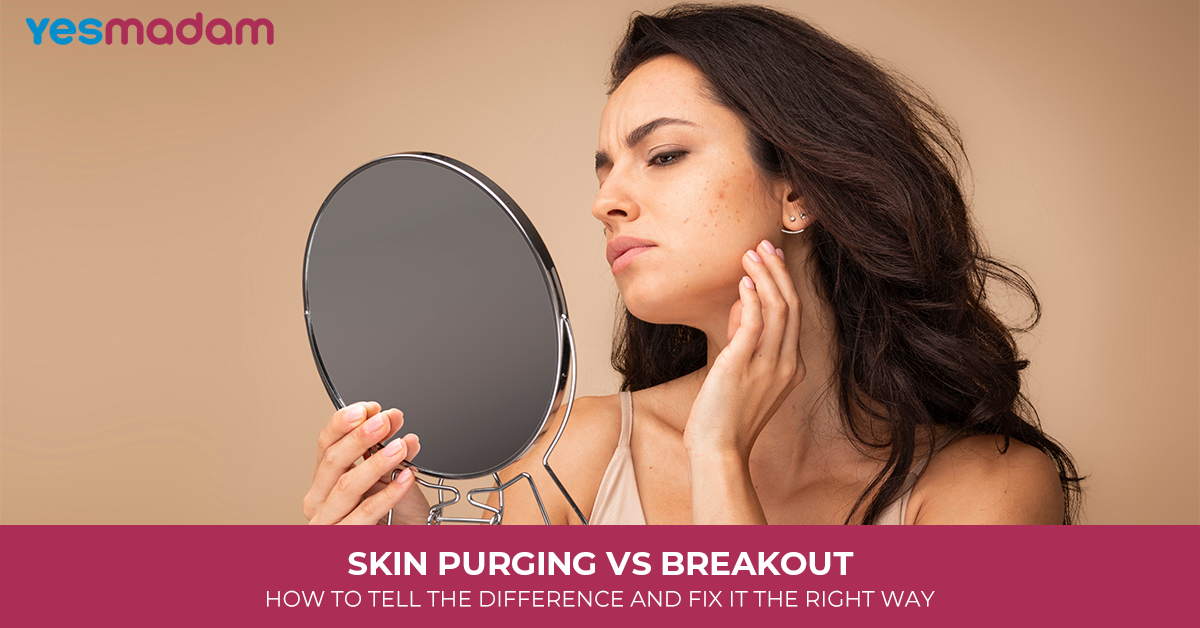
Skin Purging VS Breakout: How to Tell the Difference and Fix It the Right Way
Have you ever started a new skincare product only to wake up a few days later with a face full of tiny bumps or unexpected pimples? You might have wondered, “Is my skin reacting badly, or is this just part of the process?” Welcome to the confusing world of skin purging VS breakout.
Understanding the difference between the two can save you time, money, and a lot of stress. Because one is temporary and even a sign of progress, while the other might mean you need to stop what you’re doing immediately. In this article, we’ll break down everything you need to know, from what causes each to how to tell them apart and the best ways to handle them.
Table of Contents
What Exactly Is Skin Purging?

Before jumping into the “VS” part, let’s understand what skin purging really means. Skin purging is what happens when a product speeds up your skin’s natural exfoliation process. This often occurs with powerful ingredients like retinoids, AHAs, or BHAs, the kind of products that increase cell turnover.
When your skin renews faster, everything trapped beneath the surface (like excess oil, dead skin cells, and bacteria) rises to the top more quickly. The result? Breakouts but not the bad kind. These are temporary blemishes that indicate your skin is adjusting and renewing itself.
Why It Happens
When you start using exfoliating or active ingredients, they essentially “bring to light” congestion that was already forming under your skin. It might feel like your skin is getting worse, but what’s really happening is that those impurities are surfacing all at once instead of over time.
How Long Does Skin Purging Last?
Typically, skin purging lasts around four to six weeks, about the time it takes for your skin to complete one full renewal cycle. If your skin starts to calm down and look clearer after that, it was likely a purge.
What Is a Breakout?
A breakout, on the other hand, is your skin’s way of saying “something’s wrong.” Unlike purging, which is triggered by increased cell turnover, breakouts happen due to clogged pores, excess oil, bacteria, hormonal changes, or irritation.
They can appear as blackheads, whiteheads, papules, pustules, or cystic acne — and unlike purging, these blemishes are not a part of the healing process. In fact, continuing to use the product causing it can make things worse.
Common Causes of Breakouts
- Hormonal changes: Menstrual cycles, stress, or puberty can trigger extra oil production.
- Comedogenic products: Heavy creams, oils, or makeup can clog pores.
- Diet and lifestyle: Excess sugar, dairy, or poor sleep may contribute.
- Skin irritation: Using harsh products or over-exfoliating can damage your barrier.
How Long Do Breakouts Last?
A typical breakout can last anywhere from a few days to several weeks, depending on severity. Unlike purging, the pimples from a breakout don’t follow a predictable timeline and may leave dark spots or scars behind.
Skin Purging VS Breakout: Spot the Difference
Now that we know what each means, let’s compare skin purging VS breakout side by side.
1. Timing
- Purging: Happens shortly after you introduce a new active product like retinol or acids.
- Breakout: Can occur at any time, even if you haven’t changed your routine.
2. Location
- Purging: Appears in areas where you normally get pimples (like chin, forehead, or nose).
- Breakout: Can show up in new areas where you rarely have issues.
3. Duration
- Purging: Typically clears within four to six weeks.
- Breakout: Can last longer or reappear repeatedly.
4. Type of Product Involved
- Purging: Caused by products that speed up cell turnover (retinoids, AHAs, BHAs).
- Breakout: Caused by products that clog pores or irritate skin.
5. Appearance of Blemishes
- Purging: Usually small, similar-looking bumps that heal quickly.
- Breakout: Can vary, from whiteheads to cystic acne, often red and painful.
6. Reaction to Stopping Product
- Purging: If you stop the product, you may halt progress.
- Breakout: If you stop the product, your skin often starts improving.
Why Does Skin Purging Happen?
When you apply a product that increases cell turnover, it speeds up the life cycle of skin cells. Think of it as pressing the fast-forward button on your skin’s natural exfoliation process.
This process pushes out blockages faster, but it also temporarily floods your skin with impurities that would’ve surfaced eventually anyway. The visible breakouts you see are simply that process accelerated.
Common Triggers of Purging
- Retinoids and retinol-based creams
- Chemical exfoliants like glycolic or salicylic acid
- Enzyme-based exfoliators
- Vitamin C serums (rarely, but possible for sensitive skin)
Why It’s Actually a Good Sign
While frustrating, purging means the product is actively working to renew your skin. It’s bringing underlying blockages to the surface so that after the initial adjustment, your complexion becomes smoother, clearer, and more even-toned.
Why Breakouts Happen and When to Be Concerned
Breakouts, on the other hand, are your skin’s distress signal. When your pores get clogged and bacteria build up, inflammation occurs, leading to visible acne.
Common Breakout Triggers
- Using too many new products at once
- Not cleansing properly
- Sleeping with makeup on
- Stress, hormones, or a poor diet
- Using products that don’t suit your skin type
If your breakouts are persistent or painful, it’s a sign that your current routine or product isn’t right for you.
How to Handle Skin Purging
If you suspect your skin is purging, don’t panic it’s manageable.
1. Be Patient
Purging is temporary. Give your skin at least four to six weeks to adjust before making judgments about the product.
2. Simplify Your Routine
Stick to gentle cleansers, a non-comedogenic moisturizer, and sunscreen. Don’t add more actives or exfoliants during this time.
3. Adjust Frequency
If your skin feels irritated, reduce how often you use the product. Try applying it every other day or a few times a week.
4. Moisturize Generously
Hydration helps your skin recover faster and reduces redness or dryness caused by actives.
5. Don’t Pick or Pop
Picking at purging bumps can cause scarring and delay healing. Let them clear naturally.
How to Handle Breakouts
If it’s a breakout rather than a purge, the approach changes slightly.
1. Identify and Eliminate the Trigger
Check your recent skincare additions, makeup products, and even detergents. Remove anything that might be irritating or clogging your pores.
2. Introduce Soothing Ingredients
Look for ingredients like niacinamide, aloe vera, and ceramides that calm inflammation.
3. Use Targeted Acne Treatments
Products containing benzoyl peroxide, salicylic acid, or sulfur can help treat and prevent future breakouts.
4. Maintain a Balanced Diet
Limit sugar and dairy intake, stay hydrated, and manage stress levels these can all impact your skin’s health.
5. Consult a Dermatologist
If your breakouts are severe or persistent, a dermatologist can help identify underlying causes and prescribe effective treatments.
What If You’re Still Unsure?
Sometimes, distinguishing between skin purging VS breakout isn’t straightforward. The safest move is to observe your skin’s behavior over time.
If the reaction starts shortly after introducing a new product and gradually improves, it’s probably purging. If it worsens or spreads to new areas, it’s more likely a breakout.
When in doubt, pause all new products for a week and see how your skin responds. Simplicity often reveals the truth.
Why Knowing the Difference Matters
Recognizing skin purging VS breakout can completely change how you care for your skin. It prevents unnecessary panic, helps you stick with the right products, and ensures you don’t give up on treatments that might ultimately benefit you.
Being informed also protects your skin barrier because knowing when to push through versus when to stop can mean the difference between progress and prolonged irritation.
Conclusion
At the end of the day, skin purging VS breakout is one of the most misunderstood topics in skincare. While both may look similar, their causes and outcomes are entirely different.
Purging is often a temporary phase on your way to better skin, a sign that your actives are doing their job. A breakout, however, signals that something isn’t working for you and needs adjustment.
Listen to your skin, introduce new products slowly, and always prioritize balance. With patience and awareness, you can navigate both confidently and get closer to the clear, glowing skin you deserve.
Frequently Asked Questions
1. What is skin purging in simple terms?
Skin purging happens when new skincare products speed up cell turnover, bringing impurities to the surface. It’s temporary and usually means your product is working to renew your skin.
2. How can I tell if it’s a purge or a breakout?
If you’ve recently started a new active product and see temporary bumps in familiar areas, it’s likely purging. If pimples appear in new areas or worsen over time, it’s a breakout.
3. How long does skin purging last?
A purge usually lasts between four to six weeks. If the breakouts continue beyond that, it might be a reaction instead.
4. Should I stop using the product during purging?
Not unless your skin feels severely irritated. Try reducing frequency instead of stopping completely.
5. Can purging happen with all skincare products?
No, it usually happens with products that increase skin cell turnover like retinoids, AHAs, or BHAs not with basic moisturizers or cleansers.
6. What should I do if my skin is purging badly?
Keep your routine minimal, moisturize well, and apply sunscreen. Avoid introducing more new products until your skin adjusts.
7. Do breakouts leave marks or scars more than purging?
Yes. Breakouts, especially cystic ones, often cause more inflammation, which increases the risk of marks or scars.
8. Can diet affect purging or breakouts?
While diet doesn’t directly cause purging, consuming too much sugar or dairy can worsen breakouts. A balanced diet supports healthier skin overall.
9. How can I prevent skin purging?
You can minimize it by starting new activities slowly, using them two to three times a week at first, so your skin can adapt gradually.
10. When should I see a dermatologist?
If you experience severe irritation, swelling, or breakouts lasting more than eight weeks, it’s time to consult a dermatologist.