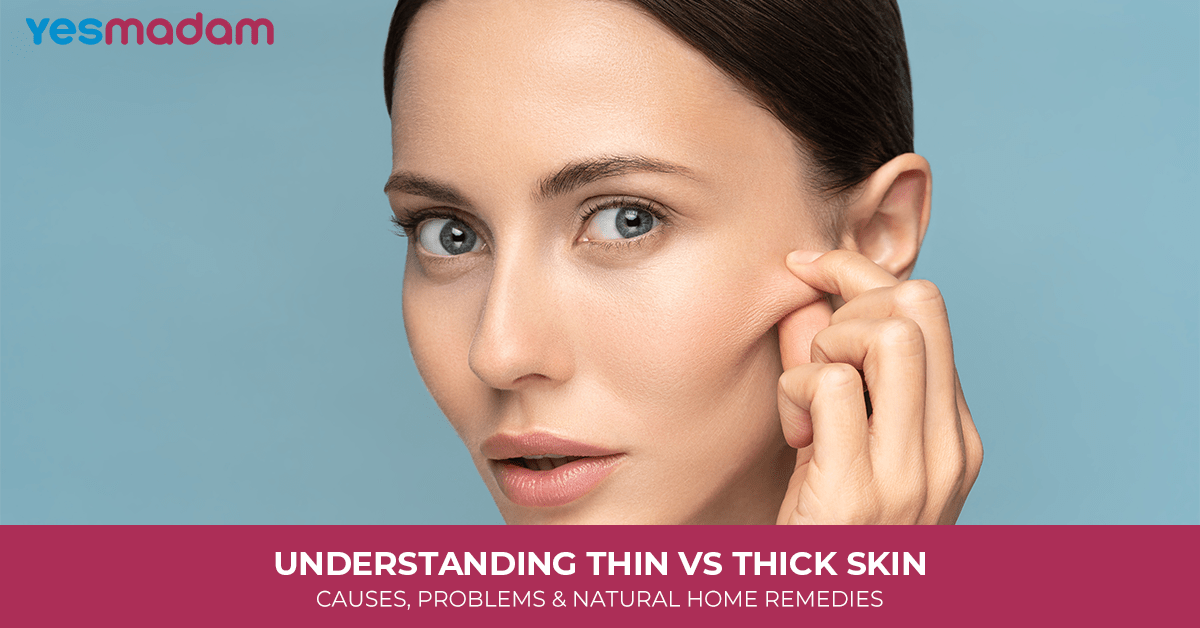
Understanding Thin vs Thick Skin: Causes, Problems & Natural Home Remedies
When we talk about thin vs thick skin, most people think it’s just about texture, smooth or rough, soft or tough. But in reality, skin thickness plays a much deeper role in your overall skin health. It affects how your body responds to aging, how quickly you heal, how sensitive your skin feels, and even how well your skincare products work.
Your skin is the largest organ of your body, serving as a protective shield against pollution, sunlight, bacteria, and everyday wear and tear. However, when it becomes too thin or too thick, this protective barrier doesn’t function as it should, leading to a range of issues like dryness, bruising, irritation, or calluses.
Let’s explore what thin vs thick skin really means, how these differences arise, and how to care for your skin naturally using effective home remedies.
More Information For You: Quick 15 Min Tan Removal Skin Care Routine
Table of Contents
What “Thin vs Thick Skin” Actually Means
Your skin has three main layers:
- Epidermis: the outermost barrier that protects against environmental harm.
- Dermis: the middle layer rich in collagen, elastin, and blood vessels.
- Hypodermis: the deepest layer that provides cushioning and insulation.
The difference between thin and thick skin comes down to how developed these layers are.
- Thin skin has a delicate epidermis and fewer structural proteins in the dermis. It’s common in areas like the eyelids, chest, or neck. This type of skin is more sensitive, prone to dryness, and shows aging faster.
- Thick skin has a dense, protective outer layer, usually found on palms, soles, and heels. However, excessive thickening in other areas can make skin rough, dull, and slow to heal.
Everyone’s skin thickness is slightly different, and it changes over time due to age, genetics, lifestyle, and environmental exposure.
Skin Issues Commonly Seen in Thin Skin

People with naturally thin or thinning skin often experience several visible and structural issues:
- Easy bruising and tearing: Since there’s less cushioning in the dermis, blood vessels are closer to the surface, leading to easy bruising.
- Fine lines and wrinkles: Reduced collagen and elastin make the skin less firm, causing early signs of aging.
- Dryness and irritation: The barrier function weakens, allowing moisture to escape and irritants to enter.
- Increased sensitivity: Even mild skincare products or environmental changes can trigger redness or itching.
- Slow healing: Thin skin regenerates more slowly, meaning cuts and scrapes take longer to repair.
Aging, excessive sun exposure, harsh chemical treatments, and long-term use of corticosteroid creams are some of the leading causes of skin thinning.
Skin Issues Related to Thickened Skin
Thickened skin isn’t always a sign of health or protection; sometimes it’s your body’s defense mechanism. Over time, skin can overproduce keratin (a protein that makes skin tough) to shield itself from pressure or friction.
Common thick skin issues include:
- Calluses and corns: Repeated rubbing or pressure (like from shoes or tools) can cause skin to harden.
- Cracked heels or elbows: As thick skin loses flexibility, it can split and cause painful fissures.
- Rough texture and dull tone: Accumulated dead cells make skin appear coarse and lifeless.
- Reduced sensitivity: Hardened skin may numb nerve endings, hiding irritation until it worsens.
Thickened skin is often found on hands, feet, knees, or elbows — but it can also appear on other areas affected by friction or chronic irritation.
How to Identify Your Skin Type
If you’re not sure whether you have thin or thick skin, here are some simple clues:
You may have thin skin if:
- Your veins, tendons, or bones are visible.
- You bruise easily or get small cuts without noticing trauma.
- Your skin feels fragile and sensitive to touch or products.
- Fine lines or wrinkles appear earlier than expected.
You may have thick skin if:
- You have rough or hardened patches on your hands or feet.
- Your skin feels less sensitive or “tough.”
- You struggle with dullness or uneven texture despite moisturizing.
- Your heels or elbows frequently crack or peel.
Knowing your natural tendency helps you choose the right care and avoid treatments that worsen the condition.
Home Remedies for Thin Skin
If your skin tends to be delicate or thinning, the goal is to nourish, protect, and rebuild the skin barrier gradually. Here’s how:
- Use Gentle Cleansers: Ditch harsh soaps and foaming cleansers that strip natural oils. Instead, choose cream-based or oil cleansers that hydrate while cleaning.
- Moisturize Regularly: Hydration is key. Look for moisturizers containing ingredients like aloe vera, shea butter, or glycerin. Natural oils such as almond or coconut oil can also help lock in moisture.
- Protect from Sun Exposure: UV rays break down collagen and elastin, worsening skin thinning. Always use sunscreen with at least SPF 30 and reapply during the day.
- Eat Collagen-Boosting Foods: Include citrus fruits, green leafy vegetables, fish, nuts, and seeds in your diet. These are rich in vitamins C and E, which support collagen synthesis and repair.
- Avoid Over-Exfoliation: Over-scrubbing can damage fragile skin. Use mild natural scrubs like oatmeal and honey once every 10–14 days to gently renew cells.
- Stay Hydrated from Within: Drinking at least 8–10 glasses of water daily keeps your skin plump and maintains elasticity. Herbal teas and antioxidant-rich drinks can also help.
- Limit Steroid Creams and Harsh Treatments: Overuse of strong medical creams can thin the skin permanently. Consult a dermatologist if you’re on long-term treatment.
Home Remedies for Thickened or Rough Skin

If your skin tends to become rough or callused, the aim is to soften, smoothen, and restore elasticity.
- Soak to Soften: Soak the affected area in warm water with a pinch of salt or a few drops of essential oil for 10–15 minutes. This loosens hardened skin, making it easier to treat.
- Gently Exfoliate: Use a pumice stone or a DIY sugar and olive oil scrub to remove dead cells. Exfoliate 1–2 times weekly to keep the skin soft and prevent buildup.
- Deep Moisturization: After exfoliating, apply a thick emollient like shea butter, petroleum jelly, or urea-based cream. Cover with cotton socks or gloves overnight to seal in moisture.
- Reduce Friction and Pressure: Identify what’s causing the thickened skin, such as tight shoes, repetitive work, or posture. Use soft padding, gloves, or protective wear to reduce mechanical stress.
- Use Natural Softening Packs: Mix honey with lemon juice and apply to rough areas for 10 minutes. Honey hydrates, and lemon helps brighten and even out the tone.
- Improve Circulation: Massage with coconut, mustard, or almond oil daily. This not only softens the skin but also boosts blood flow, helping it heal and renew faster.
- Keep the Area Clean and Protected: Avoid dirt buildup, as thickened skin is prone to cracking and infection. Clean regularly but gently, and reapply moisturizer after washing.
Lifestyle Tips for Long-Term Skin Balance
Your skin reflects your habits. Consistency in care and lifestyle matters more than any quick fix.
- Eat a balanced diet full of fruits, vegetables, and healthy fats.
- Sleep 7–8 hours nightly, skin regenerates most during rest.
- Avoid smoking and alcohol, which reduce collagen and slow healing.
- Stay active, physical movement boosts circulation and skin oxygenation.
- Adapt your skincare routine seasonally: thicker creams in winter, lighter lotions in summer.
When you treat your skin with patience and respect, it responds with strength and radiance over time.
Conclusion
Your skin tells a story of your habits, lifestyle, and how you care for yourself. Whether it’s thin skin that needs gentle nurturing or thick skin that needs softening and flexibility, both can be managed beautifully with mindful attention and natural remedies.
The key lies in balance: protect without suffocating, exfoliate without stripping, and nourish without overloading. With consistent care and small lifestyle adjustments, you can help your skin restore its natural glow and resilience — one day at a time.
FAQs
1. What causes thin skin?
Aging, sun exposure, and certain medications can reduce collagen and elastin, making skin thin and fragile.
2. Can I reverse skin thinning naturally?
You can’t fully reverse it, but hydration, sun protection, and collagen-boosting foods can strengthen and thicken the skin over time.
3. What’s the best home remedy for thick skin?
Regular warm water soaks followed by shea butter or coconut oil deeply soften rough, thickened areas.
4. Is exfoliation safe for thin skin?
Yes, but only with very mild ingredients once every two weeks. Over-exfoliating damages thin skin further.
5. Can thickened skin crack easily?
Yes, because it loses flexibility. Regular moisturizing prevents cracks and keeps the skin supple.
6. Which foods help maintain healthy skin?
Citrus fruits, nuts, fish, and leafy greens are rich in nutrients that support collagen and hydration.
7. How can I protect thin skin from bruising?
Wear protective clothing, keep skin moisturized, and strengthen capillaries through proper nutrition.
8. What oils work best for thin skin?
Jojoba, almond, and rosehip oils nourish and improve elasticity naturally.
9. How often should thick skin be exfoliated?
One to two times a week is ideal to prevent buildup without causing irritation.
10. When should I see a dermatologist?
If your skin suddenly becomes extremely thin, thick, painful, or cracked, it’s best to seek professional care.