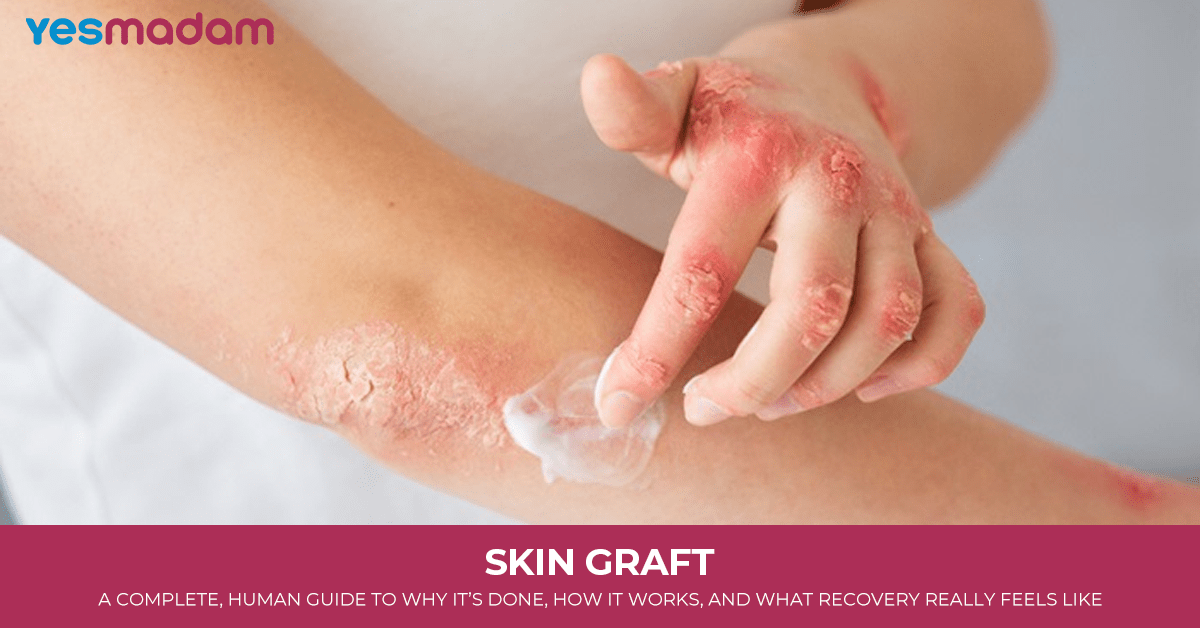
Skin Graft: A Complete, Human Guide to Why It’s Done, How It Works, and What Recovery Really Feels Like
If you’ve landed here, chances are you or someone you love has been told they might need a Skin graft, or you’re simply curious about what the surgery involves. And honestly? It’s completely normal to feel a mix of curiosity, anxiety, and a thousand practical questions.
A skin graft sounds intense because… well, it is surgery. But it’s also one of the most common and helpful tools surgeons have for closing wounds, restoring function, and helping people heal after burns, injuries, infections, or cancer removal.
I’ll break it all down in a friendly, no-jargon way: what a skin graft is, the different types, what happens during the procedure, how healing works, and what you can expect long term. Let’s take it step by step.
Table of Contents
What a Skin Graft Actually Is
A skin graft is when a surgeon removes a piece of healthy skin from one part of your body (the donor site) and places it over an area where skin has been lost or badly damaged (the recipient site).
There’s an important detail here: unlike a skin “flap,” a graft doesn’t carry its own blood supply. It survives by attaching to the wound bed and gradually developing blood flow from that area.
In plain terms: the graft is like a “patch” that has to “take root” in its new home. That “take” process is what recovery is all about.
More Information For You: Winter Skin Rash
Why Someone Might Need a Skin Graft

Before we get into types and techniques, it helps to understand why grafting is used. Doctors usually recommend a skin graft when a wound is too large, too deep, or too slow-healing to close on its own.
Common reasons include:
- Burns, especially deep second-degree or third-degree burns
- Traumatic injuries (road accidents, falls, crush injuries)
- Surgical removal of skin cancer or large lesions
- Chronic non-healing wounds, like diabetic ulcers or pressure sores, when the wound bed is healthy enough for grafting
- Infections that destroy skin and tissue
- Reconstructive surgery after major skin loss
The goal is simple: cover the wound, protect what’s underneath, and help the body heal faster with less scarring and fewer complications.
Types of Skin Grafts (And How Doctors Choose)
There isn’t just one kind of skin graft. The type depends on the wound depth, location, size, and your overall health.
Let’s walk through the main ones.
Split-Thickness Skin Graft (STSG)
A split-thickness graft includes the epidermis and a thin layer of dermis.
Where it’s used:
- Larger wounds
- Burns
- Areas where cosmetic matching is less critical
Pros:
- Covers large areas
- Donor site heals relatively quickly
- Higher chance of “take” because it attaches faster
Cons:
- More contraction/scarring as it heals
- May look or feel different from nearby skin
Think of STSG as the “workhorse” graft: practical and widely used.
Full-Thickness Skin Graft (FTSG)
A full-thickness graft includes all layers of the skin (epidermis + full dermis).
Where it’s used:
- Smaller wounds
- Face or visible areas
- Places needing better color/texture match
Pros:
- Better cosmetic outcome
- Less contraction
- Skin often looks more “normal” long term
Cons:
- Donor site needs stitches or closure
- Slightly higher risk of failure if blood supply is weak
FTSG is like choosing a premium patch when appearance or flexibility really matters.
Other Graft Options You Might Hear About
Just so you’re not surprised if your surgeon mentions these:
- Autograft: skin from your own body (most common)
- Allograft: temporary skin from another human (often used short-term in severe burns)
- Xenograft: temporary skin from animals (like pig skin)
- Skin substitutes / bioengineered grafts: lab-made or biological materials used when autografting isn’t possible right away
Autografts are still considered the standard permanent solution, while the others are often temporary or supportive until your body is ready for a lasting graft.
Don’t Miss: Home Remedies for Glowing Skin in Winter
What Happens During Skin Graft Surgery

Okay, here’s the part most people want to visualize. The actual steps are pretty methodical.
Step 1: Preparing the Recipient Site
The surgeon cleans the wound and removes dead or infected tissue. This matters because grafts need a clean, healthy surface to survive.
Step 2: Taking Skin From the Donor Site
Skin is taken from a place that can spare it—commonly the thigh, buttock, abdomen, or back.
For split-thickness grafts, surgeons shave a thin layer of skin using a special surgical tool.
Step 3: Placing and Securing the Graft
The harvested skin is placed on the wound and secured with stitches, staples, or surgical dressings. Sometimes a mesh technique is used, where tiny slits allow the graft to stretch and cover more area.
Step 4: Dressing and Immobilization
A firm dressing is applied to keep the graft stable and pressed against the wound. In some cases, suction dressings are used to help the graft “stick.”
Then the grafted area is usually kept still for a few days so it can attach properly.
How a Skin Graft “Takes” (Healing Phases)
This part explains why recovery instructions are so strict.
Phase 1: Imbibition (First 24–48 hours)
The graft survives by absorbing nutrients and fluid from the wound bed. This is its survival mode before blood vessels connect.
Phase 2: Inosculation (Day 2–5)
Tiny blood vessels begin connecting between the graft and the recipient site.
Phase 3: Revascularization (Day 5–10+)
A stable blood supply forms inside the graft. Once this happens, the graft is truly established.
That’s why swelling, infection, or too much movement early on can cause problems—anything that blocks blood flow can stop the graft from surviving.
Recovery Timeline: What to Expect Week by Week
Recovery varies by graft type, size, location, and your health. But here’s a realistic general timeline.
First 1–2 Weeks
- Dressings are checked and changed
- Mild to moderate pain is normal, especially at the donor site
- Split-thickness donor sites usually heal in about 1–2 weeks
- Full-thickness donor sites may take longer and need stitches removed later
Weeks 3–6
- The graft may look pink, darker, or patchy at first
- Tightness and reduced sensation are common
- Normal movement usually returns gradually, depending on graft location
Weeks 7–12
- The graft “matures” and settles
- Color and texture improve slowly
- Scar care often starts here (massage, silicone gels, sun protection)
Most people feel close to normal within 6–12 weeks, but larger grafts may take longer.
What the Donor Site Feels Like
People often focus on the grafted area, but the donor site matters too. It’s basically a new wound created to heal another one.
- It can sting or burn like a deep scrape
- It may ooze slightly at first
- It usually heals into a flat scar that fades over time
Good donor-site care is a big part of overall recovery.
Related Blog: Multani Mitti for Open Pores
Risks and Possible Complications
Most grafts heal well, but complications can happen.
The main risks include:
- Graft failure (partial or complete): often due to infection, movement, or poor blood flow
- Infection: at either site
- Fluid collection under the graft: can prevent attachment
- Scarring or contraction: more common with split-thickness grafts
- Color or texture mismatch
- Dryness or reduced sensation: because grafts may lack sweat glands or follicles
Your doctor monitors for these and guides you if anything seems off.
What You Can Do to Help Your Graft Heal Well
Healing isn’t passive. Here’s what helps the most:
Follow Movement Restrictions
If you’re told not to stretch or bend too much, take it seriously. Grafts can shear before they establish blood supply.
Support Your Body With Good Nutrition
Protein, vitamins (especially C), iron, zinc, and enough calories help your body rebuild tissue properly.
Avoid Smoking
Smoking reduces blood circulation, and graft survival depends heavily on circulation.
Keep It Protected and Clean
Do dressing changes exactly as instructed. Don’t “air it out” unless your doctor says so.
Protect From Sun
New grafts can darken or burn easily. Cover them or use sunscreen when cleared to do so.
Long-Term Outlook: How Grafted Skin Changes Over Time
Here’s a gentle truth: grafted skin doesn’t always become identical to original skin.
It may be:
- slightly different in shade
- less elastic
- drier
- more sensitive to injury
But it’s also strong, protective, and functional, which is the bigger purpose. Over time, most people adapt and live normally without thinking about it much.
Conclusion
A Skin graft can sound intimidating, but at its core, it’s a proven and effective way to help the body repair serious skin loss. Whether it’s used for burns, trauma, cancer surgery, or stubborn wounds, grafting helps close wounds faster, reduces complications, and supports long-term recovery.
The most important things to remember are: the type of graft depends on your wound, early healing is all about blood flow and stability, and your aftercare in the first few weeks can make a real difference.
If you’re preparing for a graft procedure, don’t hesitate to ask your surgeon questions. Follow the plan, be patient with your body, and focus on healing one week at a time.
FAQs
1. Is a skin graft a major surgery?
A skin graft is surgery, but whether it feels “major” depends on size and location. Some are outpatient and simple, while larger ones need hospital care.
2. How do doctors know if the graft is taking?
They check for warmth, good color, stable attachment, and no fluid underneath. Follow-ups in the first week help confirm it’s healing well.
3. What happens if a skin graft fails?
If a graft fails, doctors first treat the cause, like infection or pressure. Then they may allow natural healing or repeat grafting if needed.
4. Does a skin graft leave scars?
Yes, both donor and graft sites scar. Over time they often flatten and fade, and scar care helps improve appearance.
5. Which area hurts more—the graft or donor site?
Most people feel more discomfort at the donor site because it’s a fresh wound. The graft site usually feels tighter than painful.
6. How long do I need to rest after surgery?
With small grafts, rest may be a few days. Larger grafts can require weeks of protection, especially if joints are involved.
7. Can grafted skin grow hair?
Usually not. Grafted skin, especially split-thickness grafts, often lacks hair follicles, so hair growth is minimal or absent.
8. Will the graft match my natural skin color?
Not perfectly in many cases. It may start pink or dark and then settle over months into a more stable tone.
9. What should I eat to support healing?
Eat protein-rich foods, fruits and vegetables, and enough calories. Nutrition helps blood vessels grow and skin repair faster.
10. When can I shower after a skin graft?
This depends on your surgeon. Many people can shower after the first dressing change, but you’ll be told how to do it safely.