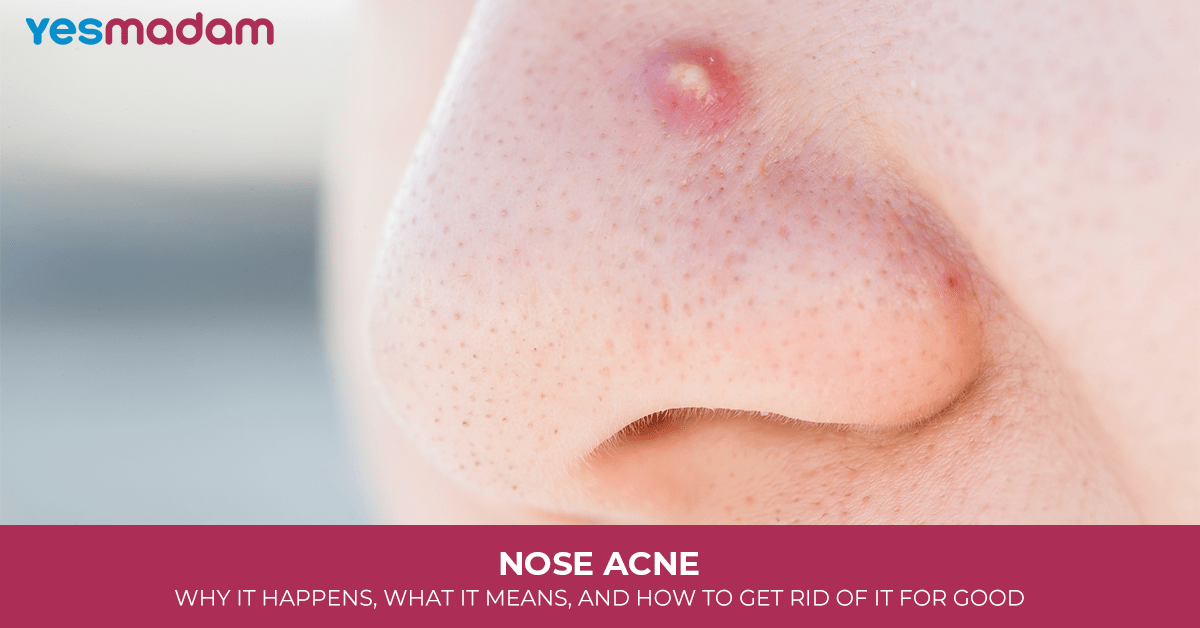
Nose Acne: Why It Happens, What It Means, and How to Get Rid of It for Good
If you’ve ever looked in the mirror and thought, “Why is there always a pimple on my nose?”, you’re not alone. Nose acne is one of the most common (and most annoying) types of breakouts out there. It’s front-and-center on your face, it tends to hurt more than other pimples, and it often reappears right when you think your skin is finally calming down.
In this guide, we’re going to unpack the full story behind nose breakouts, what causes them, how they’re different from acne elsewhere, what actually helps, and how to stop that frustrating cycle. Think of this as a chat with a skin-savvy friend who’s giving you both the science and the practical steps.
Table of Contents
Understanding Why Nose Acne Is So Common
Before we jump into treatments, let’s talk about why the nose seems to be a breakout magnet. Knowing the root cause helps you choose the right solution instead of just throwing random products at your skin.
Your nose is part of the “T-zone,” which includes your forehead, nose, and chin. This area naturally produces more oil (sebum) than the rest of your face. More oil means a higher chance of clogged pores, blackheads, and inflamed pimples. Plus, the nose has larger pores and thicker skin, which changes how acne forms there.
In short: your nose is basically a high-traffic oil-producing neighborhood. Breakouts love that.
What Causes Nose Acne?

Here’s the part where we get real: nose acne doesn’t have one cause. It’s usually the result of a few factors working together. Let’s break them down.
1. Excess Oil Production
Your sebaceous glands on the nose are naturally more active. If your skin produces more oil than usual, because of hormones, stress, weather, or skincare mistakes, that oil mixes with dead skin cells and blocks pores.
Once a pore is clogged, bacteria can grow inside it, which leads to swelling, redness, and that classic pimple pain.
2. Clogged Pores from Products
Sometimes the products meant to help your skin do the opposite. Heavy creams, oily sunscreens, thick makeup, or even certain hair products that slide down onto your face can clog pores around your nose.
If you notice nose breakouts after switching products, there’s a good chance something in your routine is too pore-blocking for your skin.
3. Hormonal Swings
Hormones can make oil glands go into overdrive. That’s why you may see more pimples around your nose during:
- puberty
- menstrual cycles
- pregnancy
- periods of high stress
- certain medications
Even if your acne isn’t “hormonal acne” overall, hormones can still play a role in nose flare-ups.
4. Touching Your Nose a Lot (We All Do It)
Rubbing your nose, resting your hand on your face, adjusting glasses constantly, or even wiping sweat off your nose transfers bacteria and oils right onto those pores.
It’s not about being “dirty” it’s just that skin doesn’t love constant friction and bacteria exposure.
5. Masks, Glasses & Friction
If you wear glasses or masks regularly, you get repeated rubbing on the same spots. That friction traps sweat and oil under pressure, which can trigger pimples right on the bridge or sides of your nose.
If your breakouts match where your glasses sit, that’s a huge clue.
Types of Nose Acne (And What They Look Like)
Not every nose breakout is the same. The treatment depends on what kind you’ve got.
Blackheads on the Nose
These are open clogged pores where oil oxidizes and looks black. They’re super common on the nose because pores are larger here.
They don’t hurt, but they make skin look bumpy and textured.
Whiteheads
Whiteheads are clogged pores that stay closed. They look like tiny white bumps and can feel rough.
Inflamed Pimples (Red, Painful Ones)
These are the ones that feel like they’ve set up camp for a week. They form when bacteria gets into a clogged pore and your immune system reacts.
Cystic Nose Acne
These sit deeper under the skin and feel like tender lumps. They last longer and can leave marks if not treated carefully.
If you get these often, it might be worth seeing a dermatologist because they usually need more than over-the-counter care.
More Information For You: The Ultimate Guide to a Yogurt Face Mask
How to Treat Nose Acne Effectively

Let’s get into what actually works. I’ll keep it realistic, no 12-step routines or miracle claims.
Start with Gentle Cleansing
You don’t need to scrub your nose like a kitchen tile. Over-cleansing makes your skin produce more oil to compensate.
What to do instead:
- Wash twice a day with a gentle cleanser
- Use lukewarm water (hot water irritates skin)
- Pat dry, don’t rub
Consistency matters more than harshness.
Now that the base is set, the next step is adding targeted acne-fighting ingredients. Here’s what helps most for nose breakouts:
1. Salicylic Acid (Best for Blackheads & Pores)
Salicylic acid is oil-soluble, meaning it can get inside oily pores and clear them out. It’s perfect for the nose.
How to use it:
- 2–4 times a week at first
- Increase slowly if your skin tolerates it
- Look for cleansers, toners, or leave-on serums
2. Benzoyl Peroxide (Best for Inflamed Pimples)
This kills acne-causing bacteria and reduces swelling.
Tips:
- Use a low strength (2.5% is usually enough)
- Spot-treat only, especially on the nose
- This can bleach fabric, so be careful with towels/pillowcases
3. Retinoids (Best for Long-Term Prevention)
Retinoids speed up skin cell turnover, meaning pores are less likely to clog in the first place.
If you’re new to retinoids, start slowly, once or twice a week, because the nose can get dry if you overdo it.
4. Clay Masks (Great Weekly Reset)
Clay absorbs excess oil and helps shrink the look of pores.
Use once a week on your T-zone. Don’t use daily, or your skin could get irritated and produce more oil.
What Not to Do With Nose Acne
Sometimes avoiding the wrong move is half the battle.
Don’t Pop Nose Pimples
I know, tempting. But the nose has sensitive blood vessels and a high chance of inflammation and scarring.
Popping pushes bacteria deeper and can turn one pimple into a bigger, angrier one.
Don’t Over-Exfoliate
Scrubs, brushes, and daily exfoliating acids can damage the barrier. When that happens, your skin freaks out, gets inflamed, and overproduces oil.
Stick to chemical exfoliation a few times a week instead.
Don’t Use Heavy Oils on the Area
Even “natural” oils can clog pores if you’re acne-prone. If you love facial oils, keep them off the nose.
Lifestyle Habits That Help Prevent Nose Acne
Skincare is huge, but it’s not the whole picture. A few simple habits can make a big difference.
Keep Your Phone and Glasses Clean
Your phone screen carries oil, bacteria, and grime. Glasses collect sweat and dead skin.
- Wipe glasses daily
- Clean phone screen at least a few times a week
Change Pillowcases Often
Oil and product residue build up fast. Changing pillowcases 2–3 times a week can reduce recurring nose breakouts.
Watch for Triggers (Without Obsessing)
Some people notice flare-ups after:
- high-sugar foods
- dairy
- lack of sleep
- stress
You don’t have to go extreme, but paying attention to patterns helps you stay ahead of breakouts.
When You Should See a Dermatologist
Most cases of nose acne can be managed at home. But professional help is worth it if:
- your pimples are deep and painful
- you get cysts often
- breakouts don’t improve after 8–10 weeks
- you’re scarring easily
A derm can prescribe stronger retinoids, antibiotics, or hormonal treatments if needed.
Building a Simple Routine for Nose Acne
Here’s a no-fuss routine you can adapt:
Morning
- Gentle cleanser
- Salicylic acid (if using)
- Light moisturizer (non-comedogenic)
- Sunscreen
Night
- Gentle cleanser
- Retinoid or benzoyl peroxide (alternate nights)
- Moisturizer
Weekly
- Clay mask 1x
- Exfoliation 2–3x max
Simple, steady, effective.
Conclusion
Let’s bring it home. Nose acne is common because the nose is naturally oily, pore-heavy, and constantly exposed to friction and bacteria. But once you understand what triggers your breakouts, and treat them in a consistent, gentle way, things get dramatically easier.
The key isn’t a “perfect” routine. It’s a reasonable one you can stick to. Cleanse gently, use salicylic acid for clogged pores, benzoyl peroxide for inflamed pimples, and a retinoid for long-term prevention. Avoid popping or over-scrubbing, and support your skin with clean habits.
Give your skin time, be patient with the process, and you’ll see progress. Your nose doesn’t have to be the permanent pimple zone.
FAQs
1. Why do I keep getting acne only on my nose?
The nose produces more oil than most areas of the face and has larger pores. This makes it easier for pores to clog and trigger breakouts repeatedly.
2. Are nose pimples related to digestion or “face mapping”?
Face mapping isn’t strongly supported by science. Nose acne is usually caused by oil buildup, clogged pores, friction, or bacteria, a direct sign of internal organ issues.
3. How long does nose acne take to heal?
Small pimples can heal in 3–7 days, while deeper ones may take 2–3 weeks. Healing speed depends on your skin type and whether the pimple was irritated or popped.
4. Can I use toothpaste on a nose pimple?
It’s not a good idea. Toothpaste can burn and irritate skin, making inflammation worse and increasing the chance of marks.
5. What’s the best product for blackheads on the nose?
Salicylic acid is usually the best choice because it clears oil inside pores. Using it consistently a few times a week helps reduce nose blackheads over time.
6. Why do nose pimples hurt more?
The skin on the nose is thicker and packed with oil glands and nerves. When a pimple forms deep there, it creates more pressure and tenderness.
7. Do pore strips help nose acne?
They can remove surface blackheads temporarily, but they don’t prevent new clogs. Overusing them can irritate skin and enlarge pores.
8. How can I prevent mask-related nose breakouts?
Wash reusable masks often, use breathable fabric, and cleanse your face right after long wear. A light salicylic acid routine also helps reduce clogged pores.
9. Is moisturizer necessary if I have oily nose acne?
Yes. Skipping moisturizer can dehydrate skin, causing it to produce even more oil. Just choose a lightweight, non-comedogenic formula.
10. When should I worry about nose acne being something else?
If a bump is persistent, doesn’t behave like acne, or bleeds easily, see a dermatologist. Sometimes conditions like rosacea or folliculitis can mimic acne.