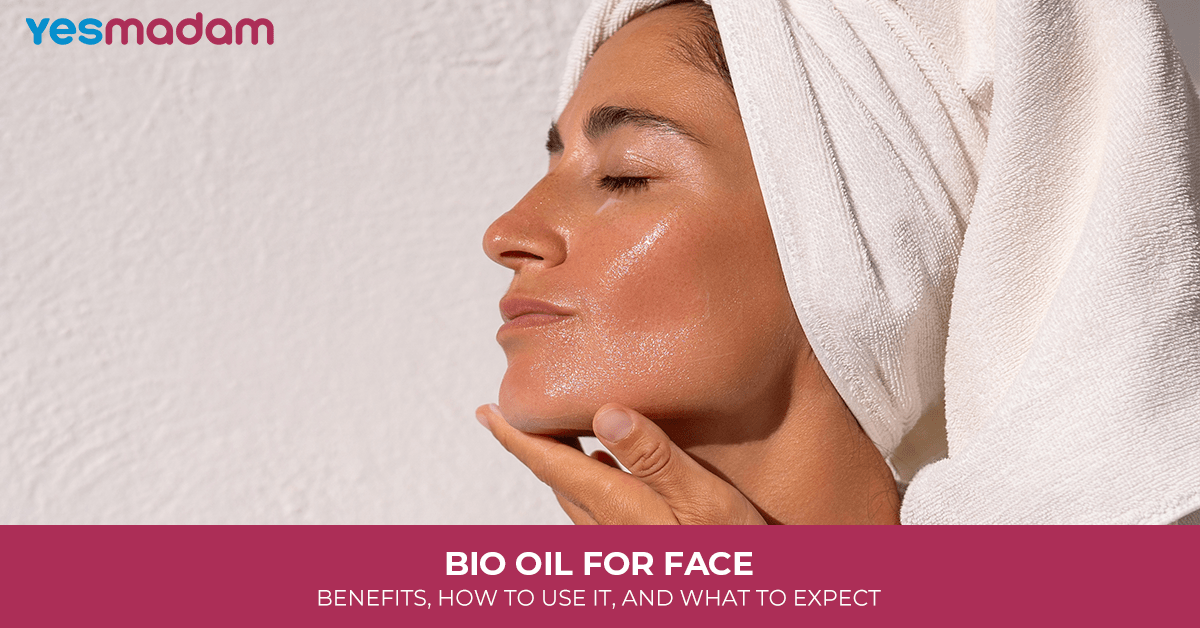
Bio Oil for Face: Benefits, How to Use It, and What to Expect
Let’s talk about Bio oil for face, because if you’ve ever stood in a skincare aisle wondering whether that little bottle is magic or hype, you’re not alone. Facial oils can feel intimidating: Will it clog pores? Will I look greasy? Is it even meant for the face? Totally valid questions. The good news is that Bio-Oil has been around for years, and when used the right way, it can be a helpful add-on for many skin types.
In this guide, I’ll walk you through what Bio-Oil is, why people use it on their face, how to apply it safely, and what results you can realistically expect. I’ll keep it simple, honest, and practical, because skincare should feel like self-care, not a chemistry exam.
Table of Contents
What Exactly Is Bio-Oil?
Bio-Oil is a blend of plant extracts, vitamins, and oils designed originally to improve the appearance of scars, stretch marks, and uneven skin tone. It’s lightweight compared to many traditional oils, and it contains an ingredient called PurCellin Oil, which is meant to make the texture less thick and easier to absorb.
If you peek at the label, you’ll typically find:
- Vitamin A (retinyl palmitate) supports skin renewal.
- Vitamin E (tocopherol) antioxidant and moisture support.
- Plant oils and extracts like calendula, rosemary, lavender, and chamomile.
- Base oils that soften and smooth.
So in plain terms: it’s a nourishing oil blend aimed at improving texture and tone, while giving skin a stronger moisture barrier.
More Information For You: Pimples After Shaving: Causes
Why People Use Bio Oil for Face

Bio-Oil has become a popular face product even though it wasn’t only marketed for facial use. People try it for a few common reasons:
- Dryness and dehydration
When your skin feels tight, flaky, or rough, a face oil can “seal in” moisture. Bio-Oil helps create a protective layer that slows water loss. - Uneven tone and pigmentation
Some users find it helps soften the look of dark spots, post-acne marks, or sun patches over time. - Scars and texture
Because Bio-Oil is well-known for scars on the body, many people apply it to facial scars, pitted areas, or old acne marks. - Glow and smoothness
Let’s be real: face oils can give that healthy, rested look even when you’re running on three hours of sleep.
But the key is how you use it, because using the right amount and pairing it with the right routine makes all the difference.
Benefits of Bio-Oil on the Face
Before we zoom into routines, let’s break down the benefits people most often report.
1. Deep Hydration Support
Bio-Oil doesn’t replace your moisturizer; it supports it. Think of moisturizer as giving water to the skin, and oil as putting a lid on it so it doesn’t evaporate. Used after a hydrating product, it can make your skin feel softer and calmer.
2. Softer Appearance of Scars
Facial scars, whether from acne, injury, or surgery, often look more noticeable when the surrounding skin is dry or inflamed. Bio-Oil may help improve the look of scars by keeping the area supple and supporting barrier repair over time.
3. Improvement in Skin Texture
When skin is nourished and less irritated, texture tends to look smoother. People often notice a more even feel, especially around dry or rough patches.
4. Gentle Brightening Over Time
Because it contains Vitamin A derivatives and antioxidant oils, some users find it gradually improves dullness or uneven tone. It’s not an overnight miracle, but consistency can help.
5. “Plump” Look for Fine Lines
Dehydrated skin makes fine lines look deeper. With regular use, an oil can make the surface look a bit plumper and more refreshed.
Is Bio-Oil Suitable for Every Skin Type?
Here’s the honest truth: Bio-Oil works for many people, but not for everyone. Your skin type matters.
Dry Skin
Dry skin often loves oils. Bio-Oil can feel like a cozy blanket for your face, especially in winter or in air-conditioned environments.
Normal / Combination Skin
This can go either way. If your T-zone gets oily but cheeks are dry, you might want to apply Bio-Oil only where you need it.
Oily / Acne-Prone Skin
This is where you need to be careful. Some people with oily skin tolerate Bio-Oil well, especially in tiny amounts. Others may find it triggers breakouts. It depends on how reactive your pores are.
Sensitive Skin
Bio-Oil includes fragrance and essential oil extracts. If your skin is easily irritated, patch testing is a must.
Bottom line: It’s not “bad” for oily skin, but you should start slow and watch how your skin reacts.
How to Use Bio-Oil on Your Face (Step-by-Step)
This part is important because oils can be amazing or annoying depending on tthe echnique.
Step 1: Cleanse Gently
Start with a clean face. Nothing fancy, just use a cleanser that doesn’t strip your skin.
Step 2: Apply a Hydrating Layer
If you use a toner, essence, or serum, apply it first. Oils work best when they lock in hydration.
Step 3: Use Only 2–3 Drops
Seriously, less is more. Warm the drops between your fingers and press them into the skin. Rubbing aggressively can irritate.
Step 4: Moisturizer on Top (Optional)
If your skin is dry, you can apply moisturizer after the oil, or mix a drop into your moisturizer. If your skin is oily, you might skip moisturizer at night and just use oil sparingly.
Step 5: Sunscreen in the Morning
If you use Bio-Oil in the morning, always finish with sunscreen. Brightening products and Vitamin A derivatives can make your skin more sun-sensitive over time.
Best Time to Apply Bio-Oil
Nighttime is usually the easiest way to start. Your skin repairs itself while you sleep, and you don’t have to worry about shine throughout the day.
Morning use is totally fine too, just keep it light so it doesn’t feel greasy under sunscreen or makeup.
What Results Can You Expect (and How Soon)?
Let’s keep expectations realistic.
- Hydration & softness: often noticeable within a few days.
- Glow & smoothness: usually within 1–3 weeks.
- Scars or dark spots: typically 6–12 weeks of consistent use, sometimes longer.
Also, progress isn’t perfectly linear. Some weeks you’ll feel like it’s working great, and other weeks your skin might feel unchanged. That’s normal.
Common Mistakes to Avoid
Using Too Much
More oil doesn’t mean more benefits. It just means clogged pores and a pillowcase that looks like a snack wrapper.
Applying on Dry, Unhydrated Skin
Oils don’t hydrate by themselves. If you put Bio-Oil on a totally dry face without hydration underneath, you might feel greasy without seeing much improvement.
Skipping Patch Test
Especially for sensitive or acne-prone skin. Try a small area along your jawline for 2–3 nights before committing.
Mixing With Strong Actives Right Away
If you’re using exfoliating acids or prescription retinoids, add Bio-Oil slowly. The combo can be a lot for some faces.
Simple Routines You Can Try
Here are easy, low-stress ways to fit Bio-Oil into your day.
Routine for Dry Skin
- Cleanser
- Hydrating serum
- Bio-Oil (2–3 drops)
- Moisturizer
Routine for Combination Skin
- Cleanser
- Serum
- Bio-Oil only on dry areas
- Moisturizer if needed
Routine for Oily Skin
- Cleanser
- Light gel serum
- Bio-Oil (1–2 drops max, only at night)
Can Bio-Oil Replace Your Moisturizer?
Not really. It can support your moisturizer, but it won’t give your skin all the water-based hydration that a good moisturizer does. Think of it as the finishing touch, not the main meal.
Final Thoughts
If you’re curious about Bio oil for face, the best approach is to treat it like a gentle helper, not a miracle shortcut. Start slow, use a tiny amount, and give your skin time to adjust. For dryness, mild scarring, and a healthy glow, it can be genuinely useful. For very oily or highly sensitive skin, it still might work, but only if your skin decides it’s on board.
The real skincare win here isn’t chasing perfection; it’s finding what makes your skin feel calm, comfortable, and cared for. And if Bio-Oil fits into that story for you, awesome.
FAQs
1. Can Bio-Oil be used daily on the face?
Yes, many people use it daily, especially at night. Start with a few drops and see how your skin responds before making it a daily habit.
2. Will Bio-Oil clog pores?
It can be used for some acne-prone or oily skin types. That’s why patch testing and using a very small amount is important.
3. Can Bio-Oil help with acne scars?
It may help soften the appearance of acne scars over time by keeping skin nourished. Results take consistency, often several weeks.
4. Is Bio-Oil safe for sensitive skin?
Some sensitive skin users do fine, but it contains fragrance and plant extracts that may irritate others. A patch test is the safest move.
5. Can I use Bio-Oil under makeup?
You can, but use only 1–2 drops and let it absorb fully first. Too much can make makeup slide or look shiny.
6. Should I apply Bio-Oil before or after moisturizer?
Usually after your serum and either before or mixed into moisturizer. If your skin is very dry, moisturizer on top can help seal everything in.
7. How long does Bio-Oil take to show results on dark spots?
Most people need around 6–12 weeks of regular use. Dark spots fade slowly, so patience is part of the process.
8. Can teenagers use Bio-Oil on their face?
Generally, yes, but teens with active acne should be extra cautious. They should start with a tiny amount and monitor breakouts.
9. Can Bio-Oil be used around the eyes?
Gently, yes, but avoid getting it into the eyes. Use a tiny dab and apply with light tapping if dryness is an issue there.
10. What’s the best way to patch test Bio-Oil?
Apply a small amount on your jawline or behind the ear for 2–3 nights. If there’s no redness, itching, or bumps, it’s likely safe to use more widely.