Babchi Oil Benefits for Skin: A Natural Remedy For Many Skin Issues
If you’ve ever wondered how to achieve radiant, healthy skin through the wisdom of ayurvedic remedies? Then, the answer may probably lie with ‘babchi’- one herb often praised for its anti-inflammatory, anti-bacterial, and skin healing properties.
Further, if you’re looking for how to make babchi oil and reap its benefits in skincare, this blog will help you explore babchi oil benefits for skin, including its exact meaning, DIY uses, and more on safe usage.
Let’s dive in to know everything in detail.
Table of Contents
What Is Babchi Oil Exactly?
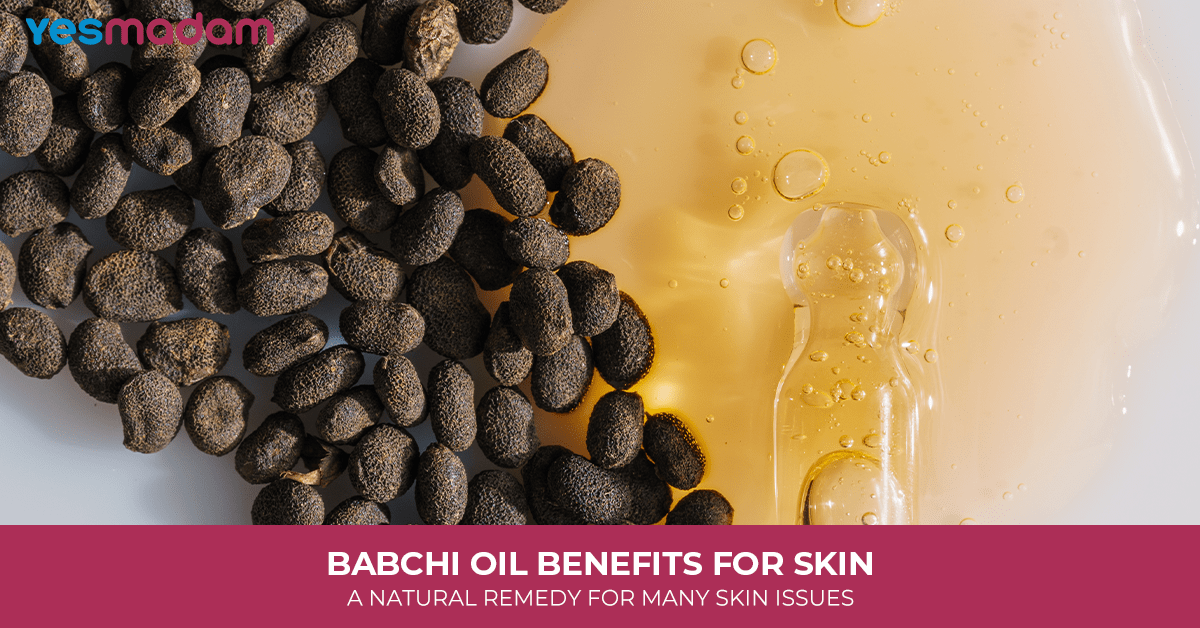
Babchi oil is a herbal oil that is extracted from babchi seeds or the seeds of the Psoralea corylofilia plant. This plant is commonly found in the subtropical countries of Africa, Asia, and the Arabian Peninsula. Renowned for its skin-enhancing properties, babchi oil includes compounds that may help enhance the appearance of your skin’s complexion.
One thing we can interpret from the meaning is that ‘babchi’ is both ancient and surprisingly modern.
More Information For You: Does Coconut Oil Darken Skin
How is Babchi Oil Made?
There are essentially two ways of extracting babchi oil, as highlighted below:
- Traditional Ayurvedic process: The traditional method of extracting babchi oil from babchi seeds is known as snehapaak. Dried babchi seeds are soaked in a carrier oil such as coconut oil or sesame oil for 4-5 days. The oil is then heated for hours gently to extract pure babchi oil for medicinal and skin uses.
- Cold-pressed method: In modern times, babchi oil is made using the cold-pressed method. Under this method, babchi seeds are ground and cold-pressed to extract a highly concentrated form of babchi.
Different Babchi Oil Benefits for Skin
Let us look at somebabchi oil skin benefits and how it can help with various skin problems:
Hyperpigmentation
Babchi oil may become your best friend if you struggle with hyperpigmentation or uneven skin tone, or dark spots.
Delays ageing
Babchi oil penetrates deep inside the skin and improves cell turnover rate, thus decreasing fine lines and wrinkles. Babchi is a gentle yet effective alternative to retinol-which is the most popular anti-ageing ingredient used worldwide, but can often be too harsh on the skin.
Skin radiance
Recognised for boosting skin brightness, babchi oil includes organic substances that encourage cellular turnover, leading to the reduction of dark spots and hyperpigmentation.
Vitiligo
Babchi is also called “ shivtraghni” due to its properties to treat vitiligo. Its seeds and oil are enriched with bioactive compounds such as psoralen, which contribute to effective vitiligo management.
Acne control
Babchi oil has anti-inflammatory and anti-bacterial properties. It not only stops acne caused by bacteria, but also reduces inflammation and redness, minimising the appearance of acne and acne marks.
Anti-inflammatory
The oil is good for calming irritated skin because of its anti-inflammatory properties. The noted babchi benefits for skin include reducing inflammation and redness.
Speeds skin regeneration
Incorporating the natural goodness of babchi oil helps address uneven skin tone. The bioactive compounds in the oil increase the rate at which skin sheds oil cells and provide a way for new ones to form.
Supports wound healing
As stated above, babchi oil enhances skin regeneration. But this benefit is not limited to anti-ageing; you can also use this oil for healing wounds and minimising scars. In Ayurveda, this magical oil is a medicinal herb cum treatment for cuts and burns.
How to Use Babchi Oil for Skin: 5 DIY Beauty Hacks
There are many simple and efficient DIY ways to use babchi oil in an everyday skincare routine. Here are the 5 best examples:
| DIY Babchi Oil Method | How To Apply | Benefits |
| Babchi oil face massage | Massage a few drops of babchi oil on your face and neck after cleaning. Massage gently using circular strokes and fingertips. |
Gives a boost to skin radiance and elasticity. |
| Home-made babchi oil serum for pigmentation | Mix 2-3 drops of babchi oil and 1 spoon of rosehip oil. Add a couple of drops of lavender oil for scent. Massage gently the serum, thus formed, onto your skin in upward and outward motions. |
Treats pigmentation, blemishes, and acne scars. |
| Babchi oil relaxing bath oil | Mix ¼ cup of Epsom salt with 2 spoons of fractionated coconut oil and 8-10 drops of babchi oil. Dissolve this mixture in warm bathwater and indulge to get a relaxing experience. |
Helps nourish and rejuvenate your skin. |
| Babchi oil night cream | Prepare the cream by mixing the goodness of babchi oil, aloe vera, licorice, and almond oil, among a host of skin-friendly ingredients. | This night cream can rejuvenate skin, relieve dryness, and provide a gentle glow to the skin. |
| Babchi oil for vitiligo | Apply a few drops of babchi oil directly onto the vitiligo spots with a clean cotton swab or your fingers. | Frequent use enhances skin tone and stimulates melanocyte activity. |
Best Carrier Oils To Use With Babchi Oil as Per Skin Type
- Dry/ageing: Almond oil, olive oil.
- Oily/acne-prone skin: jojoba oil, grapeseed oil.
- Normal/combination skin: sesame oil, coconut oil.
Who Should Avoid Babchi Oil For Skin
People who should avoid Babchi (Bakuchi) oil for skin include pregnant/nursing women, those with liver/kidney issues, individuals on blood thinners, and anyone with sensitive skin or allergies, requiring medical consultation first; also, avoid sun exposure after use as it increases sun sensitivity, and always dilute it to prevent irritation.
Who should be cautious or avoid:
- Pregnant or Breastfeeding Women: Lack of safety data means it’s best avoided or used only under strict medical guidance.
- Individuals with Sensitive Skin/Allergies: Always do a patch test, as undiluted oil can cause rashes or irritation.
- People Undergoing Medical Treatment: Consult your doctor before use, especially if you have existing skin conditions or chronic illnesses.
Important Precautions:
- Sun Exposure: Babchi oil makes skin sensitive to sunlight (photosensitive), increasing burn risk; use at night or apply high SPF sunscreen.
- Dilution: Always mix pure oil with a carrier oil (like coconut or jojoba) to prevent skin irritation.
- Patch Test: Apply a small diluted amount on your inner arm first to check for allergic reactions.
- Purity Matters: Be wary of crude oils; pure, standardised bakuchiol (a component) in cosmetic products might be safer than unprocessed oil.
Tips For Storing and Using Babchi Oil
Proper storage plays a crucial role in mitigating side effects and ensuring the purity and longevity of the oil. Here are some tips :
- Always place in dark bottles and amber to prevent oxidation.
- A patch test is a must before fully applying the oil.
- Skip sun exposure after applying the oil- babchi oil may make skin photosensitive.
- Not suitable during pregnancy or lactation without medical supervision.
Conclusion
It is amply clear from babchi oil benefits for skin, that applying the oil is key to solving skin-related issues like hyperpigmentation and dryness. It boosts collagen production and fades noticeable signs of ageing. This magical oil is more than just a trend; it’s a traditional beauty secret that’s gaining modern popularity. You can use this versatile natural oil easily with innumerable essential oils, and that too, without creating a hole in your pocket.
FAQs
Is babchi oil good for pigmentation?
Yes, Babchi oil is considered good for pigmentation, as it can help reduce the appearance of dark spots and hyperpigmentation, and may also support the restoration of color in pale patches.
What are the side effects of babchi oil?
Babchi oil has potential side effects, primarily when used undiluted, in high doses, or over a prolonged period. A key side effect is photosensitivity, which increases the risk of sunburn and skin damage when exposed to sunlight.
Is Babchi oil similar to retinol?
Babchi (Bakuchiol) is often called a natural alternative to retinol. It offers similar benefits like anti-aging and collagen boosting, but is usually gentler and less irritating than retinol.
Can Babchi oil be used for acne-prone skin?
Yes. Thanks to its antibacterial and anti-inflammatory properties, Babchi oil can help reduce acne, soothe redness, and prevent future breakouts.
Does Babchi oil help with anti-aging?
Absolutely. Babchi oil helps stimulate collagen, reduce fine lines, and improve firmness, making it beneficial for premature aging and dullness.
How do you use Babchi oil on the skin?
Always dilute Babchi oil with a carrier oil like coconut, almond, or jojoba before applying. Use it at night and apply only a small amount to clean skin.
Is Babchi oil safe for sensitive skin?
Babchi oil may irritate sensitive skin if used undiluted. A patch test is essential, and using it in a diluted form reduces the risk of redness or irritation.
Can I use Babchi oil during the day?
It’s not recommended. Babchi oil can make your skin more sensitive to sunlight, so it’s safer to use at night and apply sunscreen in the morning.
How long does it take to see results from Babchi oil?
Most people notice improvements in 4–8 weeks with consistent use. Pigmentation and fine lines may take longer depending on skin type and routine.
Can Babchi oil lighten dark spots and pigmentation?
Yes. Babchi oil contains Bakuchiol, a natural compound known for fading hyperpigmentation, melasma, and sunspots by promoting cell renewal.