The Ultimate PCOS Skin Care Routine For Clear, Healthy Skin
If you have been dealing with sudden breakouts, puffiness, or stubborn facial hair and are wondering what’s up, you may need to understand the connection between PCOS and Skin Health.
Polycystic ovary syndrome (PCOS) is a lifestyle disorder that affects nearly one in every ten women of reproductive age. It affects your hormonal levels, which may show up not just inside your body but on your skin too.
Read on, whether you’re looking for tips on how to control excess hair growth, how to cure acne, or maintain healthy skin, regardless of the challenges of PCOS, you will find all the information in this blog on pcos skin care.
Table of Contents
Demystifying the Link Between PCOS and Skin Health
Before exploring the crucial aspects of PCOS and skin health, let’s understand the connection between them in terms of what skin problems PCOS can give rise to in women:
- Hirsutism: It is the hallmark symptom of PCOS, marked by excessive hair growth in areas where men usually grow hair, like the chest, face, and back.
- Acne: Increased androgen levels ( male hormones), may stimulate oil production in the skin, causing persistent acne and clogged pores, especially on the chest, back, and face.
- Oily skin: Most women with PCOS have oily skin because of increased sebum production, which may cause acne and other skin issues.
- Dark patches: PCOS skin darkening is often associated with insulin resistance, a common condition in women with PCOS.
- Hair thinning or loss: Elevated androgen levels may cause thinning hair on the scalp, a condition called androgenic alopecia.
Best Skincare Routine for PCOS: Step By Step
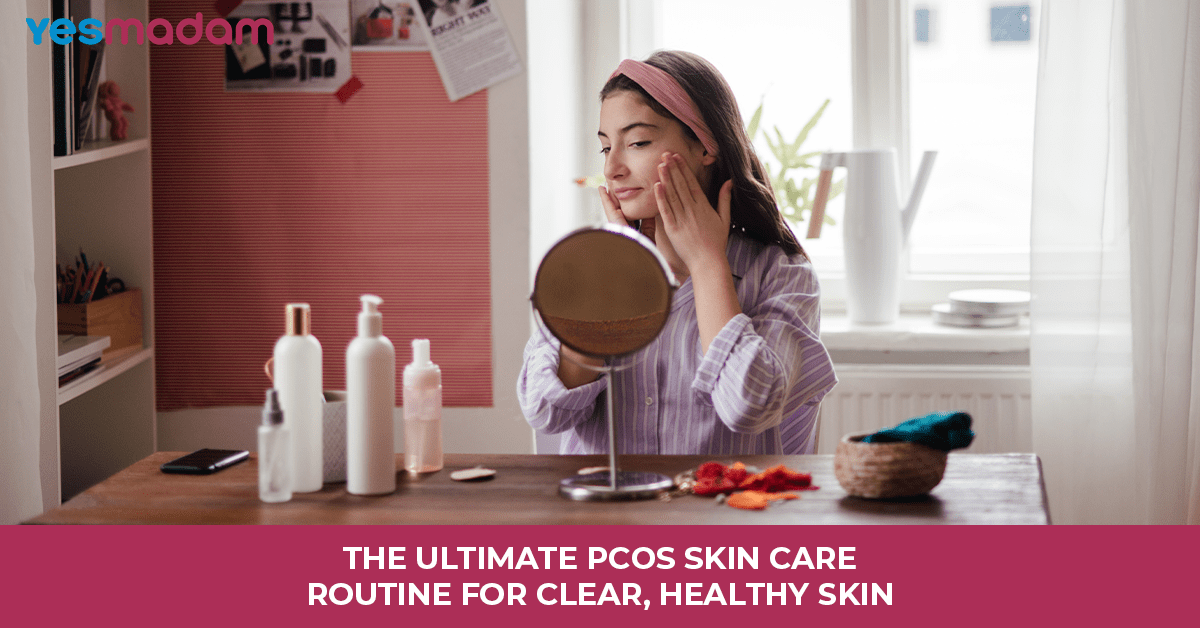
A proper PCOS skin care routine may help manage acne, sensitivity, and oiliness while maintaining skin health. Below are the five steps:
Step 1: Gentle cleansing
Use a mild, sulfate-free cleanser two times daily to eliminate excess oil without stripping natural moisture.
Step 2: Exfoliation
Include exfoliation as part of your skincare routine 2-3 times a week with products including salicylic acid or glycolic acid to prevent clogged pores and minimize acne.
Step 3: Moisturising
Even oily skin requires hydration. Choose a non-comedogenic,oil-free moisturiser to maintain a balance of sebum production.
Step 4: Sun Protection
Sunscreen is important in preventing pigmentation and protecting skin from UV damage. Apply a broad-spectrum SPF 30 or higher daily.
Step 5: Targeted Treatments
Apply topical creams containing retinoids or niacinamide to help improve acne, pigmentation, and texture.
PCOS and Your Skin: 5 Myths vs. Facts

Here are 5 common myths and facts about how Polycystic Ovary Syndrome (PCOS) affects your skin:
Myth 1: PCOS is just a cosmetic issue
Fact: PCOS is a complex hormonal and metabolic disorder, and its skin symptoms (like acne and excess hair) are signs of underlying hormonal imbalances, not just a cosmetic concern.
Myth 2: PCOS acne is the same as typical teenage acne.
Fact: PCOS-related acne is typically hormonal, often appearing as deeper, more painful cysts along the jawline, chin, and sometimes the chest and back. It often requires targeted treatments that address the hormonal root cause, not just standard over-the-counter creams.
Myth 3: Shaving facial hair will make it grow back thicker or darker.
Fact: Shaving does not alter the thickness or color of hair regrowth. It is a safe, temporary method for managing hirsutism (excessive hair growth in a male pattern) caused by high androgen levels. For long-term reduction, medical treatments like laser hair removal or prescription medication may be more effective.
Myth 4: Every woman with PCOS has the same skin problems.
Fact: PCOS symptoms vary widely among individuals. Some women may experience significant acne, while others struggle with excessive hair growth (hirsutism), dark skin patches (acanthosis nigricans), or thinning scalp hair.
Myth 5: There’s no effective way to treat PCOS skin issues.
Fact: While there is no permanent cure for the condition, PCOS symptoms can be effectively managed with the right combination of lifestyle changes (diet, exercise, stress management), proper skincare, and medical treatments.
Essential Do’s and Don’ts For Skincare With PCOS
Here are a few dos and don’ts to remember if you have skin problems associated with PCOS:
| Do’s | Don’ts |
| Use only non-comedogenic cosmetics that do not clog pores. | Avoid any kind of facials. |
| Stay hydrated by drinking a lot of water. | Do not overwash your face. Face washing should be done a maximum of two times a day. |
| Check for any allergies or sensitivities that may aggravate PCOS symptoms. | Do not touch your face often. |
| Try a gentle cleansing balm to eliminate makeup and oil without any irritation. | Avoid plucking the hair to treat excess facial hair. |
| Apply sunscreen during the day. | Do not use too many products on the face. |
| Picking or scraping acne or pimples should be avoided. | Refrain from using oily or creamy cosmetics. |
| Use a lightweight nourishing cream. | Avoid too many types of actives in the pursuit of blemish-free skin. |
| Wipe your face with a clean tissue paper rather than towels. | Do not self-diagnose. Do not apply anything on your face without a dermatologist’s recommendation. |
| Ensure to remove makeup before going to bed. | Don’t skip moisturizing, even if your skin is oily due to PCOS. |
The Best SkinBase Treatments For PCOS
Here are a few skin-based treatments for PCOS symptoms to ease symptoms and provide relief:
- Intense pulse light (IPL) for Unwanted hair ( hirsutism): Makes unwanted hair more manageable for clients with PCOS.
- Microdermabrasion for oily skin and acne: This non-surgical cosmetic treatment reduces sebum production and helps active acne to heal, reducing the risk of scarring. Paired with a calming skincare routine, minimise PCOS symptoms.
Lifestyle Changes For PCOS Skin Care
Lifestyle plays an important role in managing PCOS skin problems. For example:
- Balanced diet: Adopt a diet enriched with vegetables, fruits, whole grains, lean proteins, or healthy fats.
- Stress management: Chronic stress exacerbates hormonal imbalance. Do meditation, yoga, or deep-breathing exercises to control cortisol levels.
- Regular exercise: Physical exercise or activity of at least 30 minutes daily may improve insulin sensitivity and reduce androgen levels, resulting in better skin.
- Adequate sleep: Poor sleep affects hormone regulation. Try to get about 7-8 hours of quality sleep each night.
PCOS Hair Removal Options
For those dealing with facial hair, opt for the following hair removal options such as:
- Laser hair removal: Targets and reduces hair growth with light.
- Electrolysis: Makes use of tiny electric pulses to destroy hair follicles.
- Temporary methods: Plucking, waxing, shaving, depilatory creams-quick fixes, but hair can grow back.
Important Tips
- Stay consistent and patient: PCOS skin problems take time to improve. Stick with your treatments and routine.
- Consult a professional: A dermatologist or gynecologist will help customize a plan that works for your skin and hormone levels.
- Build a holistic approach: Combine well professional treatments, skincare practices, a healthy diet, stress management, and exercise.
Conclusion
PCOS can have a profound impact on skin health, causing various skin challenges that may affect self-esteem and quality of life. By understanding the connection between PCOS and skin problems, we can take proactive PCOS skin care steps toward managing the symptoms. Collaborating with dermatologists and nutritionists will help create a comprehensive plan tailored to individual needs.
FAQs
Can pcos cause skin pigmentation?
Yes, PCOS often causes skin pigmentation, primarily due to insulin resistance leading to Acanthosis Nigricans (dark, velvety patches in folds like neck, armpits) and hyperpigmentation (dark spots/marks from acne or general darkening).
Does PCOS cause darkening of the skin?
Yes, Polycystic Ovary Syndrome (PCOS) can cause skin darkening, primarily through Acanthosis Nigricans (dark, velvety patches in skin folds due to insulin resistance) and post-inflammatory hyperpigmentation (dark spots left after acne).
Does PCOS cause oily skin?
Yes, PCOS (Polycystic Ovary Syndrome) commonly causes oily skin because the hormonal imbalances, particularly high levels of androgens, stimulate sebaceous glands to produce excess oil (sebum).
What skincare routine is best for PCOS-prone skin?
A gentle cleanser, oil-free moisturizer, non-comedogenic sunscreen, and targeted treatments like niacinamide or salicylic acid work best. Consistency is key.
Can PCOS cause skin pigmentation?
Yes, PCOS can lead to melasma, dark patches, and acanthosis nigricans due to insulin resistance and hormonal fluctuations.
Which ingredients are safe for PCOS-related acne?
Ingredients like salicylic acid, niacinamide, azelaic acid, tea tree oil, and retinoids (with medical guidance) are generally safe and effective.
Should women with PCOS avoid certain skincare products?
Heavy, pore-clogging products, harsh scrubs, alcohol-based toners, and steroid creams should be avoided as they can worsen acne and sensitivity.
Does diet affect PCOS skin problems?
Yes, a low-glycemic, balanced diet with fruits, vegetables, healthy fats, and limited sugar can help reduce inflammation and improve skin health.
Can sunscreen help PCOS-related pigmentation?
Absolutely. Daily broad-spectrum sunscreen prevents dark spots from worsening and protects hormonally sensitive skin from sun damage.
Are natural remedies helpful for PCOS skincare?
Natural ingredients like aloe vera, turmeric, green tea, and rose water can soothe skin, but they should be used carefully and alongside medical advice.
When should someone with PCOS see a dermatologist?
If acne, pigmentation, or excessive hair growth is severe or not improving with regular skincare, consulting a dermatologist is recommended for targeted treatment.