Infected Acne Treatment: A Complete, In-Depth Guide to Healing Acne Safely and Effectively
Acne is frustrating on its own, but when it becomes painful, swollen, red, and filled with pus, it’s no longer just acne; it’s an infection. Infected acne treatment is not something you want to delay or ignore, because improper handling can lead to scars, worsening inflammation, and long-term skin damage.
Many people make the mistake of popping or aggressively treating acne without realizing that infection changes everything. In this guide, we’ll walk through what infected acne really is, why it happens, how to treat it safely, and how to prevent it from coming back, all in a way that’s easy to understand and practical for real life.
Whether you’re dealing with one painful breakout or recurring infected acne, this article will help you make informed, skin-safe decisions.
Table of Contents
Understanding What Infected Acne Really Is
Before jumping into treatment, it’s important to understand what makes acne infected and why it requires a different approach.
What Causes Acne to Become Infected?
Acne becomes infected when bacteria enter an already clogged pore. Normally, acne starts when oil, dead skin cells, and bacteria get trapped in hair follicles. However, when that pore is disturbed by squeezing, scratching, or friction, bacteria can spread deeper into the skin.
This deeper invasion triggers inflammation and infection, which is why infected acne often looks more severe than regular breakouts.
How Infected Acne Is Different From Regular Acne
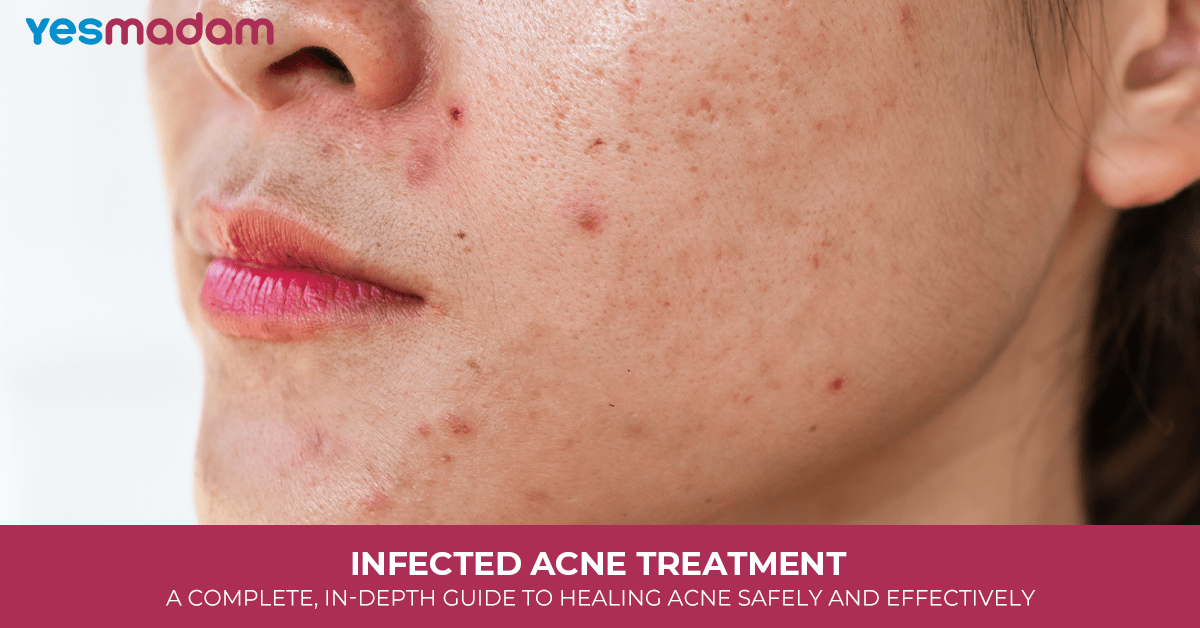
Regular acne might be annoying, but infected acne is painful and often warm to the touch. You may notice redness spreading beyond the pimple, thick yellow or green pus, and tenderness that worsens over time.
This is a clear sign that your skin needs targeted care rather than harsh acne products.
Common Signs and Symptoms of Infected Acne
Recognizing infected acne early can prevent complications and speed up healing.
Visible Signs to Look For
Infected acne often appears as swollen, red bumps with a shiny surface. The skin around it may look irritated, and the pimple itself may grow larger instead of healing.
Physical Sensations You May Experience
Pain is one of the biggest indicators. Infected acne can throb, feel hot, or hurt even when untouched. In some cases, you might also experience mild fever or fatigue if the infection is severe.
More Information For You: Pimple Pop
Why Proper Infected Acne Treatment Is Crucial
Treating infected acne incorrectly can do more harm than good, especially if you rely on aggressive DIY methods.
Risks of Ignoring Infected Acne
Left untreated, infected acne can spread bacteria to nearby pores, creating clusters of painful breakouts. Over time, this can lead to deep scars or dark marks that take months to fade.
Why Popping Makes It Worse
Popping infected acne forces bacteria deeper into the skin and increases inflammation. This not only delays healing but also increases the risk of permanent scarring.
Medical Approaches to Infected Acne Treatment
When acne becomes infected, medical treatment is often the safest and most effective route.
Topical Treatments Prescribed by Dermatologists
Dermatologists commonly prescribe antibiotic creams or gels to control bacterial growth. These treatments help reduce inflammation and prevent the infection from spreading.
Oral Medications for Severe Infections
For widespread or painful infected acne, oral antibiotics may be recommended. These work internally to reduce bacteria and inflammation but are usually prescribed for short durations to avoid resistance.
When Professional Drainage Is Necessary
In rare cases, a dermatologist may safely drain an infected lesion using sterile tools. This should never be attempted at home.
Related Blog: Nose Acne
At-Home Care That Supports Healing
Medical treatment works best when paired with gentle and consistent skincare.
Keeping the Area Clean Without Overdoing It
Use a mild, fragrance-free cleanser to wash your face twice daily. Over-cleansing strips the skin and can worsen inflammation rather than improve it.
Soothing the Skin During Recovery
Applying warm compresses can help improve blood flow and support natural healing. Always use clean cloths to avoid introducing more bacteria.
What Ingredients Help With Infected Acne
Certain ingredients can support healing when used correctly and gently.
Anti-Inflammatory Ingredients That Calm Skin
Ingredients like aloe vera and niacinamide help soothe redness and strengthen the skin barrier, making it easier for acne to heal.
Bacteria-Fighting Ingredients to Use Carefully
Benzoyl peroxide and sulfur can be effective but should be used sparingly. Overuse may irritate already inflamed skin.
Lifestyle Factors That Influence Acne Infections
Skincare alone isn’t enough if underlying habits are working against you.
Diet and Hydration
High-sugar and processed foods may worsen inflammation in some people. Drinking enough water supports skin repair and overall health.
Stress and Hormonal Imbalances
Stress increases cortisol, which can trigger oil production and slow healing. Managing stress through sleep, movement, or mindfulness can positively impact acne recovery.
Don’t Miss: Nodular Acne
Preventing Acne From Becoming Infected Again
Prevention is just as important as treatment when it comes to infected acne.
Hands Off Policy for Breakouts
Avoid touching your face throughout the day. Even clean hands can transfer bacteria and worsen existing acne.
Choosing the Right Skincare Products
Use non-comedogenic products and avoid heavy oils that clog pores. Gentle formulas reduce irritation and keep skin balanced.
When to See a Dermatologist
Not all acne infections can be handled at home, and knowing when to seek help matters.
Signs You Need Professional Help
If acne is worsening, spreading, or causing significant pain, a dermatologist should evaluate it. Persistent infections should never be ignored.
Benefits of Early Intervention
Early treatment reduces scarring risk and shortens recovery time, saving both your skin and your confidence.
Conclusion
Dealing with infected acne can feel overwhelming, but the good news is that it’s treatable with the right approach. Infected acne treatment isn’t about harsh products or quick fixes, it’s about understanding your skin, treating it gently, and knowing when to seek professional care.
By avoiding harmful habits, supporting your skin barrier, and staying consistent with proper treatment, you can heal current infections and reduce future breakouts. Healthy skin isn’t about perfection; it’s about patience, balance, and informed choices.
Frequently Asked Questions
What is the fastest way to heal infected acne?
The fastest way is to keep the area clean, avoid touching it, and use dermatologist-recommended treatments. In severe cases, medical intervention speeds up healing safely.
Can infected acne heal on its own?
Mild cases may improve on their own, but untreated infections often worsen. Proper care reduces pain, scarring, and healing time.
Is infected acne dangerous?
While not usually dangerous, infected acne can lead to scars or spreading infections if ignored. Early treatment prevents complications.
Should I stop my regular acne products if acne is infected?
Yes, harsh products can irritate infected skin. Switching to gentle, soothing products helps reduce inflammation.
Can makeup worsen infected acne?
Heavy or non-comedogenic makeup can trap bacteria and delay healing. It’s best to avoid makeup on infected areas.
How long does infected acne take to heal?
With proper care, infected acne can improve within one to two weeks. Severe cases may take longer and require medical help.
Does stress really affect infected acne?
Yes, stress increases inflammation and oil production, which can worsen acne infections and slow healing.
Can infected acne leave scars?
Yes, especially if picked or popped. Early treatment significantly lowers the risk of permanent scarring.
Is it okay to use ice on infected acne?
Ice can reduce swelling temporarily, but it should be used gently and wrapped in cloth to avoid skin damage.
When should I see a doctor for infected acne?
If the acne is painful, spreading, or not improving after a few days, professional evaluation is recommended.