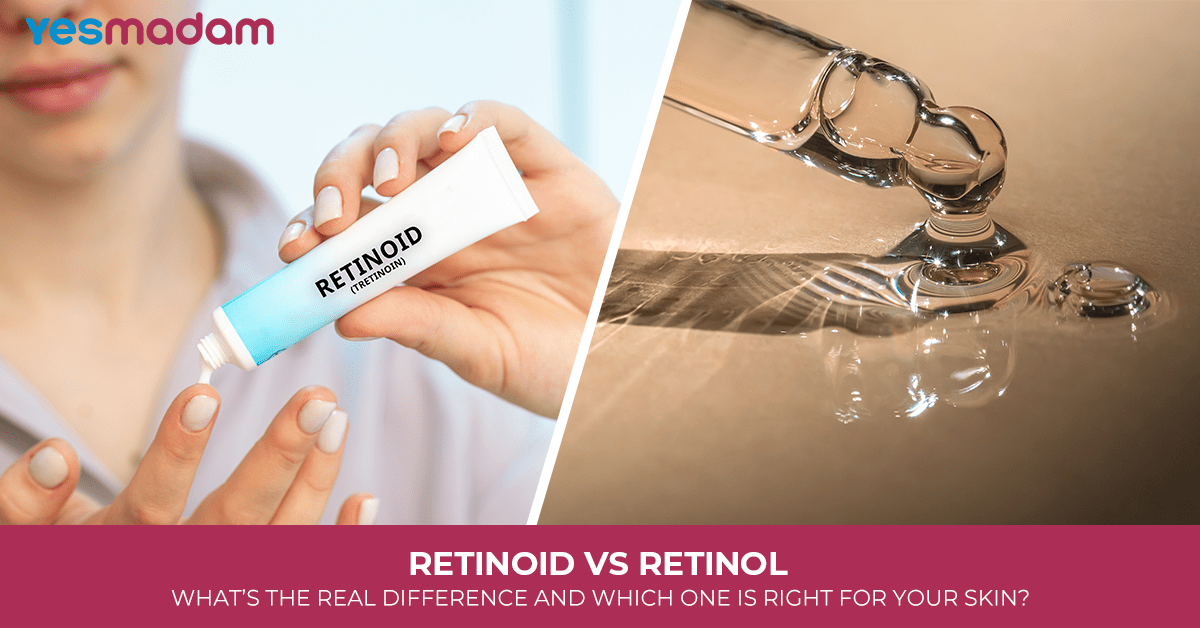
Retinoid vs Retinol: What’s the Real Difference and Which One Is Right for Your Skin?
When it comes to skincare, few ingredients are as talked about or as confusing as retinoid vs retinol. You’ve probably seen both names on product labels, heard glowing reviews online, and maybe even received mixed advice about which one you should use. Some people swear by them for acne, others credit them for smoother skin and fewer wrinkles, while many are unsure where even to begin.
The truth is, retinoids and retinol are closely related, but they’re not the same. Understanding how they differ, how they work, and who they’re best suited for can make a world of difference for your skin. In this guide, we’ll break everything down in a clear, friendly, and practical way, so you can make an informed decision without feeling overwhelmed.
Table of Contents
What are Retinoids and Retinol?
Before we compare retinoid vs retinol, it’s important to understand what these ingredients actually are and why they’re so powerful in skincare.
At their core, both retinoids and retinol are derived from vitamin A. Vitamin A plays a crucial role in skin cell turnover, collagen production, and overall skin health. That’s why these ingredients have earned the nickname “gold standard” in dermatology.
However, the way they’re formulated and how they behave on your skin is where the real differences begin.
Understanding Retinoids
Retinoids are the umbrella term that includes all vitamin A derivatives used in skincare and dermatology. This category includes both prescription and non-prescription forms.
How Retinoids Work on the Skin
Retinoids work by binding directly to receptors in your skin cells. Once they attach, they send signals that speed up cell turnover and encourage collagen production. This means old, damaged skin cells shed faster, while fresh, new ones come to the surface more quickly.
Because retinoids work directly at the cellular level, they tend to deliver faster and more dramatic results compared to gentler alternatives.
Common Types of Retinoids
Not all retinoids are created equal. Some are extremely strong and only available by prescription, while others are milder. Common examples include tretinoin, adapalene, and tazarotene. These are often recommended for persistent acne, advanced signs of aging, and certain skin conditions.
Due to their strength, retinoids can be irritating if not used properly, which is why they’re often introduced gradually.
Understanding Retinol
Retinol is a specific type of retinoid, but it’s significantly gentler and widely available over the counter.
How Retinol Works Differently
Unlike stronger retinoids, retinol needs to go through a conversion process once applied to the skin. It must first convert into retinaldehyde and then into retinoic acid before it can actually work. This extra step slows things down, which is why retinol is milder and less irritating.
While results may take longer, retinol still delivers impressive benefits when used consistently.
Why Retinol Is Popular in Skincare
Retinol has become a favorite in mainstream skincare because it strikes a balance between effectiveness and tolerability. Many people can use it without experiencing intense redness or peeling, making it an excellent starting point for beginners.
Retinoid vs Retinol: Key Differences Explained

Now that we’ve covered the basics, let’s clearly break down the retinoid vs retinol debate so you can see how they compare side by side.
Strength and Potency
The biggest difference lies in strength. Retinoids are much more potent and work faster because they don’t need to be converted by the skin. Retinol, on the other hand, works more slowly but is gentler and easier to tolerate.
Speed of Results
If you’re looking for quicker results, especially for acne or deep wrinkles, retinoids tend to deliver faster improvements. Retinol requires patience, but the gradual progress often feels more manageable for sensitive skin types.
Risk of Irritation
With great power comes greater responsibility. Retinoids are more likely to cause dryness, peeling, redness, and sensitivity, particularly in the early stages. Retinol has a lower risk of irritation, especially when used correctly.
Benefits of Retinoids for the Skin
Retinoids are often prescribed for a reason, they’re incredibly effective when used properly.
Acne Treatment and Prevention
Retinoids help keep pores clear by preventing dead skin cells from clogging them. This makes them highly effective for treating blackheads, whiteheads, and inflammatory acne.
Anti-Aging and Wrinkle Reduction
By boosting collagen production, retinoids can soften fine lines and improve skin firmness over time. Many dermatologists recommend them for long-term anti-aging care.
Improved Skin Texture and Tone
With consistent use, retinoids can help fade dark spots, smooth rough texture, and promote a more even complexion.
Benefits of Retinol for the Skin
Retinol may be gentler, but it’s far from ineffective.
Gradual Anti-Aging Results
Retinol encourages collagen production and smoother skin, just at a slower pace. This makes it ideal for people who want anti-aging benefits without aggressive side effects.
Brightening and Smoothing Effects
Regular use can improve skin tone, refine texture, and give the skin a healthier glow over time.
Beginner-Friendly Skincare Option
For those new to vitamin A products, retinol offers a safer and more approachable entry point.
How to Choose Between Retinoid vs Retinol
Choosing between retinoid vs retinol ultimately depends on your skin type, concerns, and experience level.
If you’re dealing with severe acne or advanced signs of aging and have guidance from a dermatologist, a retinoid may be the right choice. If your skin is sensitive, dry, or you’re just starting out, retinol is usually the smarter option.
Your lifestyle matters too, stronger retinoids often require stricter sun protection and more careful application.
How to Use Retinoids and Retinol Safely
Regardless of which option you choose, proper use is essential to avoid irritation.
Start Slow and Build Gradually
Begin by using your product once or twice a week. As your skin adjusts, you can slowly increase frequency.
Moisturize and Protect
Always pair vitamin A products with a good moisturizer, and never skip sunscreen during the day. These ingredients make your skin more sensitive to the sun.
Be Patient with Results
Whether you choose retinoid or retinol, consistency matters more than speed. Results often take weeks or even months to fully appear.
Common Myths About Retinoid vs Retinol
There’s a lot of misinformation out there. One common myth is that stronger is always better. In reality, the best product is the one your skin can tolerate long-term.
Another misconception is that retinol doesn’t work. While it’s slower, its results are well-documented and scientifically supported.
Conclusion:
The debate around retinoid vs retinol doesn’t have a one-size-fits-all answer, and that’s actually a good thing. Both ingredients offer incredible skin benefits when used correctly. Retinoids deliver faster, more powerful results but require careful handling, while retinol offers a gentler, more beginner-friendly approach with impressive long-term benefits.
Understanding your skin’s needs, being patient with the process, and staying consistent will help you get the most out of whichever option you choose. When used thoughtfully, either can become a game-changer in your skincare routine.
FAQs
What is the main difference between retinoid and retinol?
The main difference lies in strength and how they work. Retinoids act directly on the skin and are stronger, while retinol needs to convert first, making it gentler and slower.
Can beginners use retinoids?
Beginners can use retinoids, but it’s usually better to start with retinol first. This allows the skin to build tolerance and reduces the risk of irritation.
How long does it take to see results?
With retinol, results often appear after 8–12 weeks of consistent use. Retinoids may show visible improvements sooner, sometimes within a few weeks.
Can I use retinol every day?
Once your skin adjusts, many people can use retinol daily. However, it’s best to start slowly and listen to your skin’s response.
Are retinoids safe for sensitive skin?
Sensitive skin can use retinoids, but caution is essential. Lower strengths, reduced frequency, and proper moisturizing help minimize irritation.
Do I need sunscreen when using these products?
Yes, sunscreen is essential. Both retinoids and retinol increase sun sensitivity, making daily SPF non-negotiable.
Can retinol cause purging?
Yes, retinol can cause a temporary purge as cell turnover increases. This usually settles within a few weeks with consistent use.
Is retinol safe for long-term use?
Retinol is safe for long-term use when applied correctly. Many people use it for years as part of their skincare routine.
Can I combine retinol with other active ingredients?
Retinol can be combined with some ingredients, but caution is needed. Avoid using it with strong acids initially to prevent irritation.
Which is better for anti-aging: retinoid or retinol?
Both are effective for anti-aging. Retinoids work faster, while retinol offers gradual results with better tolerability for many users.